
Stevens-Johnson Syndrome (SJS) Patient Finds Relief with PROSE

Grace Avila was having back pain when her physician prescribed a muscle relaxer. Within a few weeks, blisters appeared across her body. Doctors thought she had a hand, foot, and mouth disease, a common viral infection in young children that sometimes occurs in adults. Over and over, she was told, “Just let it run its course.” But to Grace, whatever was happening to her body felt like it was eating her alive. She couldn’t eat, walk, or see. When her sister visited, she immediately called 911. Grace had blisters covering her mouth, eyes, throat, torso, and more. “I’d rather be dead than be here,” she told her sister. Living with Stevens-Johnson Syndrome A nurse by profession, her sister was convinced Grace had Stevens-Johnson Syndrome (SJS), a severe condition that affects the skin, genitals, eyes, and mucous membranes, including the lining of the digestive tract. Stevens-Johnson Syndrome is caused by an adverse reaction to medication or, sometimes, infection and can cause severe symptoms such as Grace’s that require months to heal, if they heal at all. Grace’s condition was so debilitating that she spent two weeks in the hospital with her eyes completely covered by bandages and her mouth sealed shut because of blisters. She was kept alive via IV fluids. After two weeks in care, she had surgery, where surgeons placed membranes on her eyes to prevent further scarring. Following her hospital stay and surgery, Grace’s left eye didn’t produce any tears, and it never will again. When she [...]

2025-01-30T14:27:27-05:00November 17, 2022|Blog Posts, PROSE|

PROSE Provider Spotlight: Dr. Brittany Yelle | Precision Cornea Centre of Ottawa

We recently sat down with Dr. Brittany Yelle, a PROSE Provider at Precision Cornea Centre in Ottawa, Canada, to learn about her experience using PROSE treatment and scleral lenses, and how she chooses between these modalities when working with patients.  Prefer video? You can watch Dr. Yelle answer our questions here. What led you to become a PROSE (Prosthetic Replacement of the Ocular Surface Ecosystem) provider?  What led me to become a PROSE Provider was having really complex cases sent over by my cornea colleagues and not being able to get adequate fittings. I wouldn’t put up with telling them that there was nothing else that could be done. So, I decided to become part of the PROSE family so that I can help those patients out.  How has fitting specialty lenses changed your perspective on the needs of your patients?  Fitting PROSE or specialty contact lenses has definitely changed my perspective in the sense that I we’d put up with things beforehand and say that’s all that could be done. And now, we’ve got so many other options for patients. So, if patients are motivated, I tell them that we should never give up and keep going.  When do you use PROSE treatment vs. a traditional scleral lens?  I consider PROSE treatment to be like a tailored suit. Some patients prefer having their suits tailored right off the bat, and some patients have no choice but to get a tailored suit. And so, depending on the case, I’ll often [...]

2024-04-03T12:51:16-04:00November 3, 2022|Blog Posts, PROSE|

PROSE Provider Spotlight: Dr. Christina Abuata | Baylor College of Medicine

We recently sat down with Dr. Christina Abuata, a PROSE Provider at Baylor College of Medicine, to learn about her experience using PROSE treatment and scleral lenses, and how she chooses between these modalities when working with patients.  Prefer video? You can watch Dr. Abuata answer our questions here. Why did you choose a career in specialty contact lenses? What drove me to fit specialty contact lenses was an externship that I did in optometry school. I was with a really great mentor who taught me the foundations of fitting scleral lenses, and during those appointments with the patients, patients always would say ‘you really need to do this, we never got the care that we needed and that we wanted, and we need more doctors like you’. And I was still a student at the time so I thought that maybe pursuing a residency or a fellowship and creating a stronger foundation would lead me to that path, and that’s why I wanted to fit specialty contact lenses PROSE vs scleral, what’s the difference? I fit both PROSE and scleral lenses, and the main difference that I take into consideration when I’m doing a consult with patients is their underlying condition. If it is a chronic progressive condition or somebody that I feel needs more time to fit, a little bit more hand-holding in the beginning, and maybe more customization, that’s where I draw the line and I say that they’re a PROSE candidate. If I have a patient [...]

2024-04-03T12:52:18-04:00October 12, 2022|Blog Posts, PROSE|

BostonSight PROSE Provider Network Welcomes Dr. Britney Kitamata-Wong

Supports PROSE Treatment Growth Dr. Britney Kitamata-Wong, UCSF Needham, Mass. –June 21, 2022 – BostonSight® announced today that Britney Kitamata-Wong, OD, FAAO, FSLS, has joined the PROSE Provider Network at the University of California, San Francisco site. Dr. Kitamata-Wong joins Dr. James Li at UCSF as the need for PROSE treatment grows. They are part of a select group of PROSE-trained Fellows, with fewer than 30 optometrists in the world holding this designation. PROSE® is a medical treatment that saves sight in individuals with severe ocular surface disease.  For many people, PROSE is often their only option to restore visual function and end suffering from critical and devastating eye issues resulting from complications of severe dry eye, keratoconus, ocular GVHD, Sjögren’s Syndrome, Stevens Johnson Syndrome, corneal damage or injury, and other corneal diseases. PROSE treatment teams include cornea specialist ophthalmologists and optometrists who have completed an intensive BostonSight PROSE Clinical Fellowship. During treatment, doctors customize prosthetic lens devices from gas-permeable polymers for each patient’s condition and unique eye shape. PROSE teams work in partnership with the patients’ other medical providers to ensure that treatment manages the underlying eye condition. Dr. Kitamata-Wong earned her Doctor of Optometry degree at the University of California, Berkeley, School of Optometry. She completed a residency in cornea and contact lenses at the Southern California College of Optometry at Marshall B. Ketchum University. Her clinical interests include visual rehabilitation and contact lens management for patients with ocular surface disease and corneal irregularities. Dr. Kitamata-Wong has worked in clinical research relating to contact [...]

2024-04-03T12:13:56-04:00June 21, 2022|Press Release, PROSE|

Dr. Bita Asghari, Associate Director of Clinical Education, Featured on Two Podcasts

Dr. Bita Asghari, PROSE provider and BostonSight's Associate Director of Clinical Education, was recently featured on two podcasts: Clique on Dry Eye: The Intersection of Scleral Lenses and Dry Eye Disease (19 min) Scleral contact lens expert, Dr. Bita Asghari, discusses how scleral contact lenses intersect with other dry eye therapies to bring patients maximal comfort.  Find out where sclerals can fit into your treatment strategy.   Try Not to Blink: Is it a Fit Issue or an Eye Issue In this special episode, Try Not to Blink hosts, Jimmy and Roya, talk to Dr. Asghari about her background and how she fulfilled her American Dream though her optometric career.

2024-04-04T13:36:35-04:00June 17, 2022|Blog Posts, In the Media, SCLERAL, PROSE|

BostonSight’s Dr. Karen G. Carrasquillo Promoted to Senior Vice President, Clinical and Professional Affairs

Expanded role will include developing BostonSight’s Educational Center of Excellence Dr. Karen G. Carrasquillo Needham, Mass. –June 7, 2022 – BostonSight®, a nonprofit eye healthcare organization and research center dedicated to saving sight and improving quality of life for patients, announced today that Karen G. Carrasquillo, OD, PhD, FAAO, FSLS, FBCLA, has been promoted to Senior Vice President, Clinical and Professional Affairs.  Dr. Carrasquillo previously served as Vice President, Clinical and Professional Affairs. In this expanded role, Dr. Carrasquillo will build upon BostonSight’s educational initiatives by developing BostonSight’s educational center of excellence, which will provide education on scleral lenses and the treatment of ocular surface diseases. She will have broad responsibility for the development and growth of global market knowledge and demand for BostonSight lenses, treatments, innovations, research, and technologies. “Dr. Carrasquillo’s passion and drive to educate, raise awareness, and promote our work has been a key driver in elevating BostonSight’s reputation to a well-recognized, supportive, and collaborative organization,” said Sara Yost, BostonSight President and CEO. “Her unwavering commitment to BostonSight’s mission and vision has created a bridge to the international scleral lens community.” Dr. Carrasquillo has a remarkable resume. She has contributed a vast amount of knowledge to the scleral lens industry based on her years of clinical and medical device design experience. In 2015, she led BostonSight in the research and development of the patented BostonSight SCLERAL FitKit®. She has been vital to the product’s success over the past 5 years and continues to lead product [...]

2024-04-03T12:25:28-04:00June 7, 2022|PROSE, Press Release|

BostonSight Continues PROSE Provider Network Expansion with The Ohio State University Wexner Medical Center

Increasing Access to Life-Changing Treatment that Saves Sight in People with Severe Corneal Disease BostonSight® announced today they welcomed The Ohio State University Wexner Medical Center as the newest PROSE® Provider Network site along with Drs. Chantelle Mundy, OD, and Stephanie Pisano, OD. With the addition of Ohio State Wexner Medical Center, the BostonSight PROSE Provider Network now includes 19 sites in four countries. PROSE by BostonSight is a medical treatment that saves sight in individuals with ocular surface disease. For many people, PROSE is often their only option to restore visual function and end suffering from critical and devastating eye issues resulting from complications of severe dry eye, keratoconus, ocular GVHD, Sjögren’s Syndrome, Stevens-Johnson Syndrome, corneal damage or injury, and other corneal diseases. PROSE treatment teams include cornea specialist ophthalmologists and optometrists who have completed an intensive BostonSight PROSE Clinical Fellowship. During treatment, doctors customize prosthetic lens devices from gas-permeable polymers for each patient’s condition and unique eye shape. PROSE teams work in partnership with the patients’ other medical providers to ensure that treatment manages the underlying eye condition. “At BostonSight we continue to expand our network of PROSE providers so that more patients can access this life-changing treatment,” said Sara Yost, BostonSight President and CEO. “With the addition of Ohio State Wexner Medical Center, we can help more patients in central Ohio and beyond. We are excited to welcome Dr. Mundy and Dr. Pisano, and the Wexner Medical Center team, to the PROSE Network.” Dr. Chantelle Mundy [...]

2024-04-03T11:57:42-04:00May 23, 2022|Press Release, PROSE|

How to Put in Eye Drops

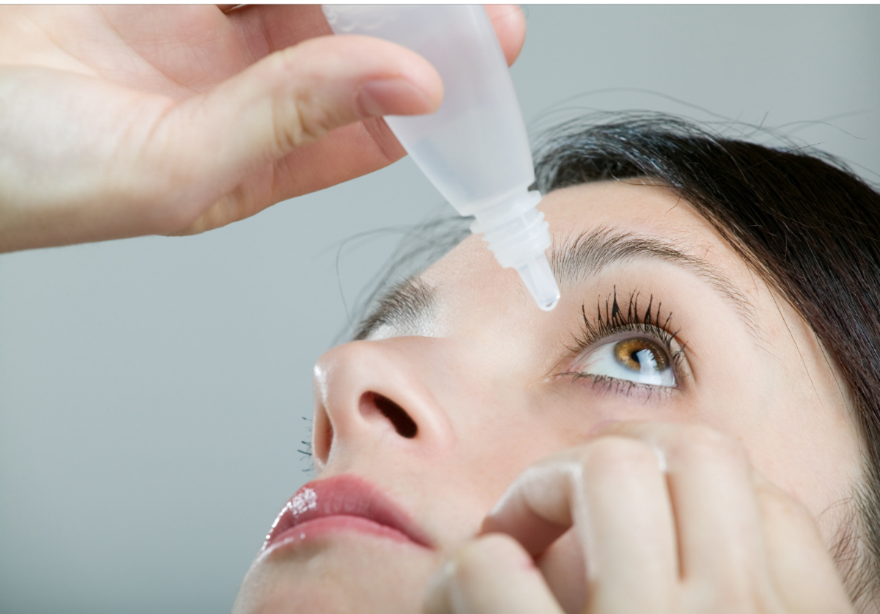
Numerous eye health conditions require treatment with eye drops. Depending on your symptoms and diagnosis, various formulations may be recommended by your healthcare provider. Some eye drops are purchased over-the-counter whereas others require a prescription. While the use of eye drops to treat eye health problems might seem simple at first, many people find the use of eye drops more difficult in practice. Our BostonSight® PROSE patients are more than familiar with these challenges as most first-line treatments for eye conditions require the use of some type of eye drops. In fact, research has shown that even experienced eye drop users often are ineffective with their applications. To best treat your condition, it’s important to use your eye drops as directed by your physician. The National Institutes of Health provides a fact sheet with photos and offers these additional tips to use drops safely and correctly. Putting in eye drops – tips  Wash your hands before using eye drops, to prevent dirt or germs from getting into your eye. Tilt your head back and gently pull your lower eyelid down. Look up. Hold the bottle close to your eye, but do not let it touch your eye. Squeeze the eye drops into your lower eyelid, again without touching your eye. Let go of your eyelid and close your eyes (do not squeeze them shut). To prevent eye drops from leaking into your nose and throat, gently apply pressure to the inner corner of your eye. Use a clean, separate tissue to blot each eye if needed. Keep [...]

2022-10-12T14:32:57-04:00December 17, 2021|Blog Posts, SCLERAL, PROSE|

BostonSight PROSE Gives Toxic Epidermal Necrolysis Survivor Her ‘Freedom Back’

For almost 20 years, Lindsay Hendrix’s poor ocular health limited what she could do and where she could go. After surviving toxic epidermal necrolysis (a severe allergic reaction that is fatal to 30% of those who contract it) at age 10, her ability to enjoy life on any given day was dictated by the condition of her eyes. In grade school, her main symptoms were excessive tearing and severe light sensitivity. BostonSight PROSE patient, Lindsay Hendrix “I had a really hard time,” remembers Lindsay. “I had red puffy eyes and looked like I was crying all of the time. I was embarrassed.” Lindsay tried BostonSight PROSE treatment but, “had a difficult time inserting the prosthetic device, and the idea of shoving a piece of plastic into my irritated eye confused and scared me. Dr. Jacobs and I weighed the pros and cons and decided I didn’t need PROSE yet.” Despite her challenges, Lindsay earned her Doctorate of Physical Therapy and joined the adult working world. But her eyes got worse, and around 2014 her symptoms changed. “My main issue was dryness; it felt like someone was holding a fan in front of my eyeball.” Her left eye dried out each day, and by early evening it would completely close. Over time, her eye began to close earlier and earlier in the day. Soon Lindsay could no longer drive at night. She began to worry about her future, and the future of her eyes. When Lindsay became engaged to [...]

2024-04-03T12:12:07-04:00December 13, 2021|Blog Posts, PROSE|

Dr. Karen Carrasquillo publishes case report in Contamac’s Global Insight

Dr. Karen Carrasquillo, OD, PhD, FAAO, FSLS, FBCLA, and VP of Professional and Clinical Affairs, published a case report in Contamac's Global Insight on September 30. Titled "Refitting Success: Reducing Suction and Maximizing Oxygen Permeability," Dr. Carrasquillo recounts the case of a 60-year-old woman with a history of keratoconus and dry eye syndrome in both eyes, history of corneal scraping in the left eye 25 years prior, history of post hydrops left eye, and questionable potential history of amblyopia left eye. Despite a good lens fit, the patient reported pressure sensation with device wear and difficulty with device removal at the end of the day. These symptoms are traditionally associated with lens compression and suction with increased wear time. Read the case report to see how Dr. Carrasquillo modified the lens design so that the patient was able to achieve 20/25+2 best corrected visual acuity with an average comfortable daily wear of up to 12 hours.

2024-04-03T12:32:17-04:00October 4, 2021|PROSE, In the Media, SCLERAL|
Go to Top