Patient Story
Meet Kara
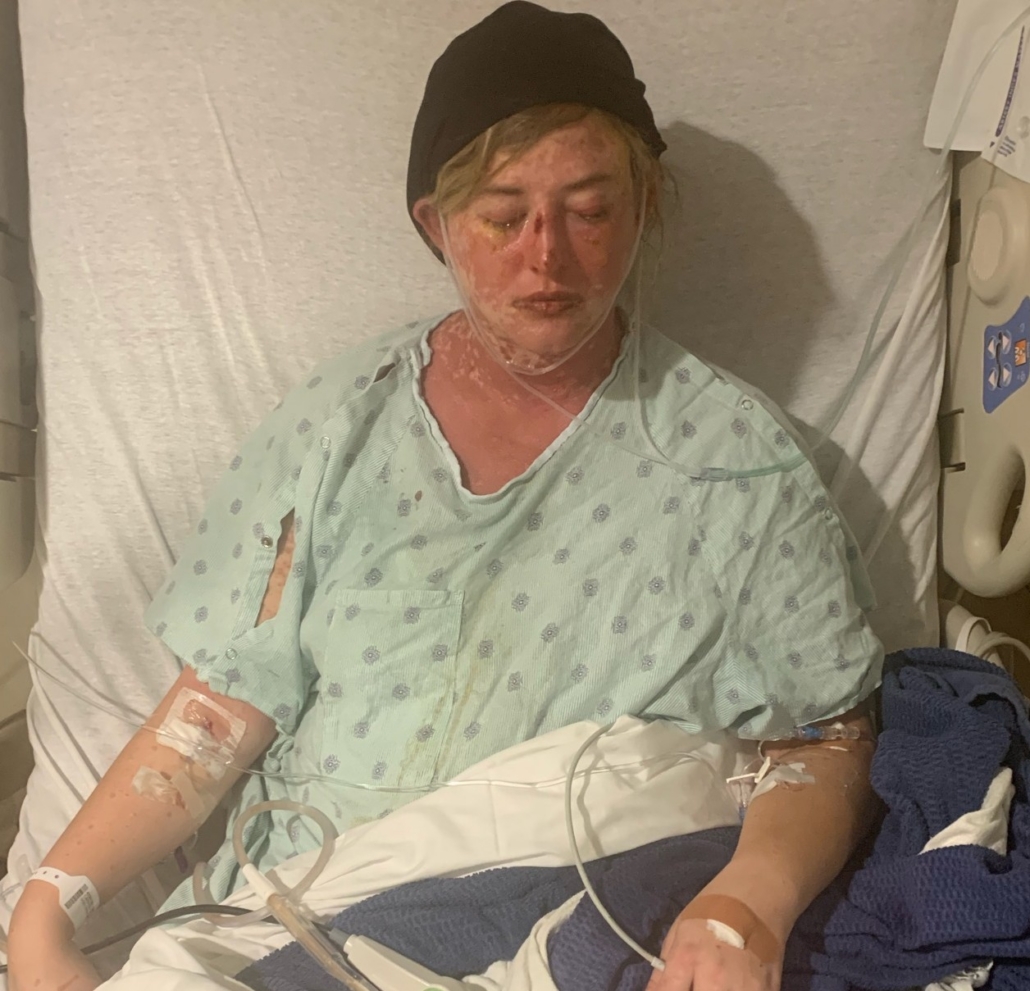
At 35 years old, Kara had already survived something most people have never heard of. Kara developed Stevens–Johnson syndrome (SJS), a rare and life-threatening condition often triggered by medications. The disease attacks the body’s mucous membranes, including the delicate surface of the eyes.
What is Stevens-Johnson Syndrome?
SJS and the most severe variant of the disease, toxic epidermal necrolysis syndrome (TENS), are most often caused by intense immune reactions to medication or infection. SJS and TENS cause severe blistering of the skin and mucous membranes, including the eyes. SJS can permanently damage the inside of the eyelids, causing the lid edges to become rough and develop abnormal lashes that rub against the cornea. SJS also damages tear, mucous, and oil glands which are critical to maintaining a healthy ocular surface. SJS can lead to extreme pain and light sensitivity, and scarring resulting in blindness.
“I went from being a functional person with 20/20 vision to being in the ICU for a month,” she recalls. “I was bedbound. Stevens-Johnson syndrome decimated my quality of life.”
Within an hour of being admitted to intensive care, Kara nearly lost her eyesight. Emergency treatment helped save her vision through an amniotic membrane graft, a procedure using donor tissue to reduce scarring on the surface of the eye. When she left the hospital after a month-long stay, she had regained some vision, but debilitating pain and severe blurriness remained.
Searching for answers
Determined to find answers, Kara visited eye doctor after eye doctor, searching for relief from chronic pain and vision loss. Despite her persistence, nothing restored the independence she had lost. She refused to accept that this would be her life. Her low-vision therapist told her about PROSE. Using Siri on her phone to conduct a web search, Kara learned as much as she could about PROSE treatment. Convinced that PROSE treatment was what she needed, Kara scheduled an appointment with the PROSE Clinic nearest to her.
PROSE treatment
Over several weeks, Kara worked closely with a PROSE Fellow optometrist and a corneal specialist to customize prosthetic devices that addressed her unique needs. Daily appointments focused not only on the fit of the devices, but also on how she was feeling, her questions, and education.
“The process was extremely customized, hands-on, and education-driven,” Kara says. “Right after my first fitting session, I instantly felt hope. They wanted to make sure I had the tools, confidence, and support to be successful long term.”
After three months, Kara felt maximum relief. At her 12-month follow-up, her corneal specialist shared something unexpected: the surface of her cornea had begun healing beyond what they thought was possible.
PROSE helped Kara get her life back
“I got my life back. I can drive a car now. I can look at a computer screen. I can watch TV. I can hang out with friends. I can get out of bed every day.”
She started vlogging, talking about the difficulties of dry eye to raise awareness about the treatments that have been the most effective for her. “If more people knew about PROSE, then more lives could be changed,” she says. Her message to patients considering PROSE is clear: “Hang in there. Don’t give up. There is so much hope to be had. There’s a learning curve, and you’ll need to work closely with your medical team. But if you persevere, you can get to a beautiful place.”