Manufacturing
About our Lab
BostonSight manufactures specialty lenses in our state-of-the-art lab in Needham, Massachusetts. Practitioners use our proprietary FitConnect® platform to custom-design lenses for their patients, interfacing directly with our high-precision DAC lathes to cut configurations to precise tolerances.
Our team is trained in lean manufacturing principles, aiming for continuous improvement and efficiency. Lean manufacturing decreases production time and eliminates waste, enabling us to manufacture and ship lens orders quickly.
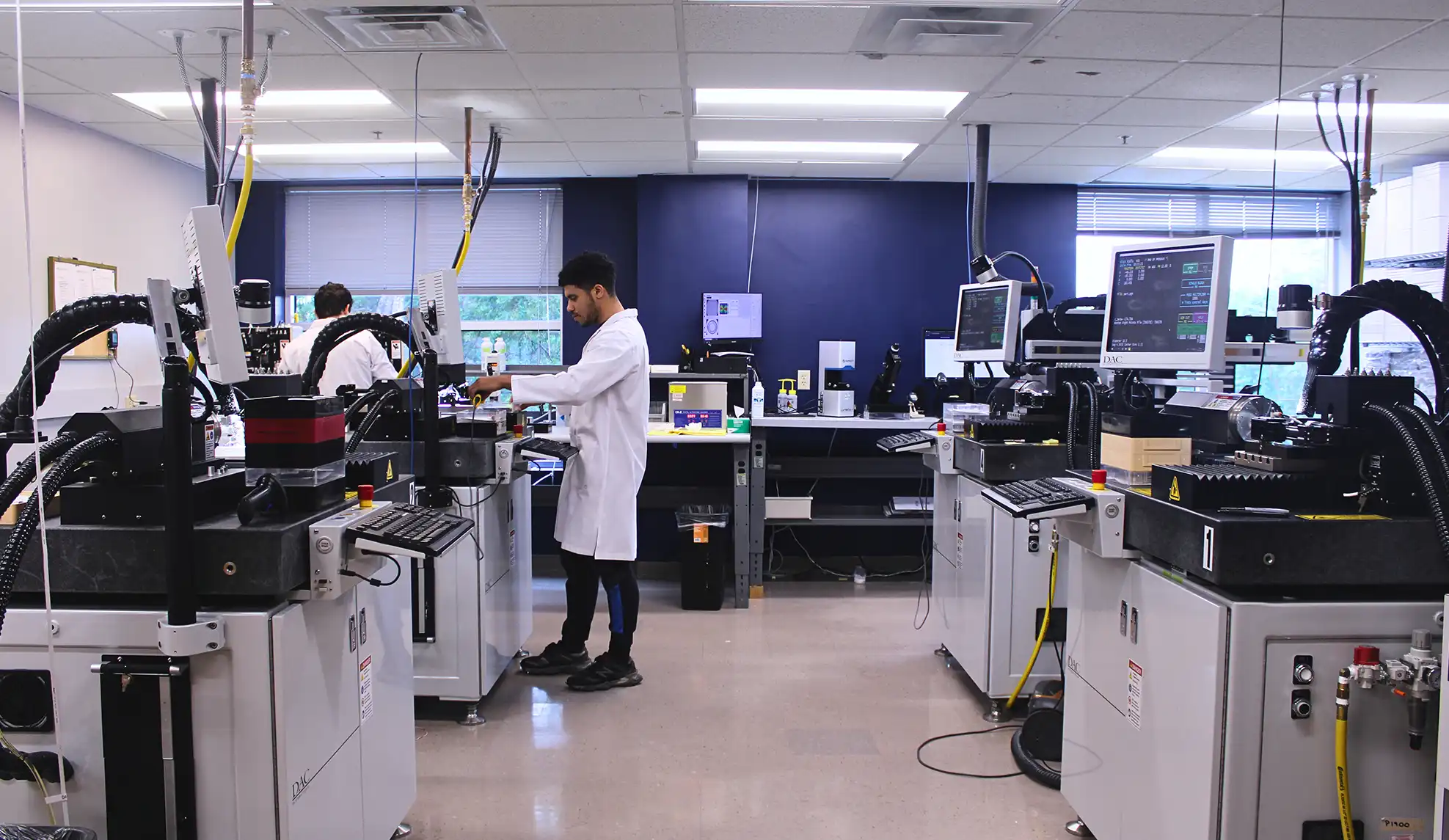
4 DAC
# of lathes
12
# of full-time lab staff
3 business days
Average manufacturing time
A Day in the Lab
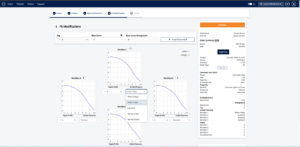
Design
Lens design specifications entered by a practitioner in FitConnect are queued for the lab technician to process.
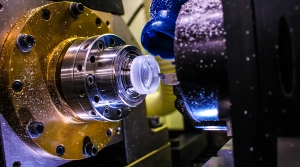
Diamond Tip Cutting
A round block of plastic is placed in the lathe, where a diamond tip begins cutting the diameter of the lens and the base curve. The base curve is the curvature of the lens’s back surface.
Radiuscope
The lens base curve is measured using this vertical microscope to be sure it reflects the doctor’s prescription. The lens is then moved to a blocker, where a wax blocking compound is applied to protect the base curve.
Back to the Lathe
The lens is returned to the lathe, where the front surface is cut. Each lens is laser-engraved with the order number, device number, and last four letters of the patient’s name. It is then moved to a small ultrasonic unit to remove the wax blocking compound and clean the device.
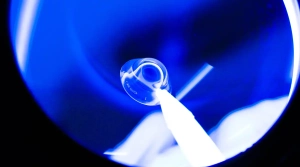
Lensometer
The lens is placed in a lensometer, which checks the prescription for accuracy. The lens is then moved to a thickness gauge.
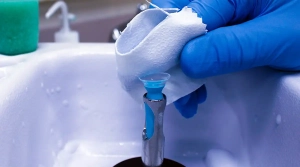
Tabletop Polisher
This hand-operated unit is a silk wheel used to polish the edge of the lens, which must be round and smooth for patient comfort. After polishing, we check the lens under a microscope to ensure edge and overall surface quality.
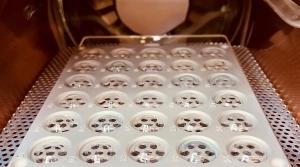
Plasma Treatment Unit
The lens is moved to the plasma unit, where the surface is treated with ionized oxygen under pressure, assuring a comfortable surface for the patient.

Tangible-HydraPEG Station
For some patients, a Hydra-PEG coating is requested to increase wettability of the lens, which can prevent protein buildup. Lenses are placed on a special tray with Tangible Hydra-PEG solution and then placed in a shaker. After treatment, devices are placed in a sealed case in conditioning solution.
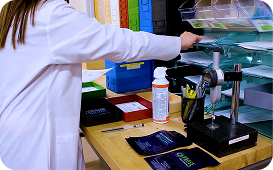
Shipping and Pick Up Area
The lens order, now complete, is checked out.
Materials
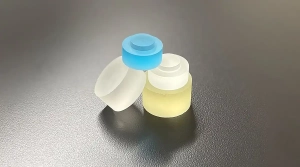
We’re proud to offer our specialty lenses using these top materials: Contamac, Boston Materials, and Acuity Polymers.
Quality Management System
BostonSight’s manufacturing lab is FDA 21 CFR Part 820 Quality Management System Regulation (QMSR) and ISO 13485:2016 compliant and is authorized to work with Contamac, Bausch & Lomb, and Acuity Polymer materials.
Our Technology in Action
Explore more of our technology

Our Products