• Needham PROSE Clinic
  • Find a PROSE Clinic
  • Donate
  • Contact Us
  • Patient Care
    • PROSE Treatment
    • Find a PROSE Clinic
    • Conditions We Treat
    • Patient Stories
    • Patient Resources
    • Pediatrics
  • Technology
    • Our Products
    • Software Platforms
    • Manufacturing
  • Education
    • Visiting Clinicians
    • FitAcademy International
    • FitAcademy for Residents
    • FitAcademy Immersive
    • Ophthalmology Resident Lectures
  • Research
    • Clinical Trials and R&D Services
    • Research Studies
    • Publications
  • About
    • Our Approach
    • News
    • Our People
    • Our Partners
  • Needham PROSE Clinic
  • Find a PROSE Clinic
  • Donate
  • Contact Us
  • Click to open the search input field Click to open the search input field Search
  • Menu Menu

Dr. Karen Carrasquillo Talks Specialty Lenses on ABB Podcast “Dede Talks”

July 30, 2021/0 Comments/in In the Media/by michele

BostonSight’s Dr. Karen Carrasquillo was recently featured on ABB Optical Group’s Podcast “DeDeTalks: The Art of Specialty Lenses.”  Dr. Carrasquillo discussed unusual scleral lens designs, her calligraphy, and how it is all tied together.

The monthly podcast explores how fitting is as much an art as it is a science.  The podcast will also dive into the featured eye care professional’s portfolio to showcase the many talents of ECPs across the country, including a variety of artistic mediums, such as painting, photography, food, sculptures, and more.

The podcast is available on YouTube, Apple Podcasts, and SoundCloud.

Listen to Dr. Carrasquillo’s episode here or watch it on YouTube here.

https://www.bostonsight.org/wp-content/uploads/2026/06/DeDeTalks_Introduction-e1627645332506.png 800 800 michele /wp-content/uploads/2026/05/bostonsight-logo.svg michele2021-07-30 11:42:472021-07-30 11:42:47Dr. Karen Carrasquillo Talks Specialty Lenses on ABB Podcast “Dede Talks”

BostonSight PROSE Preserved Our Son’s Vision

July 1, 2021/0 Comments/in Blog Posts, PROSE/by michele
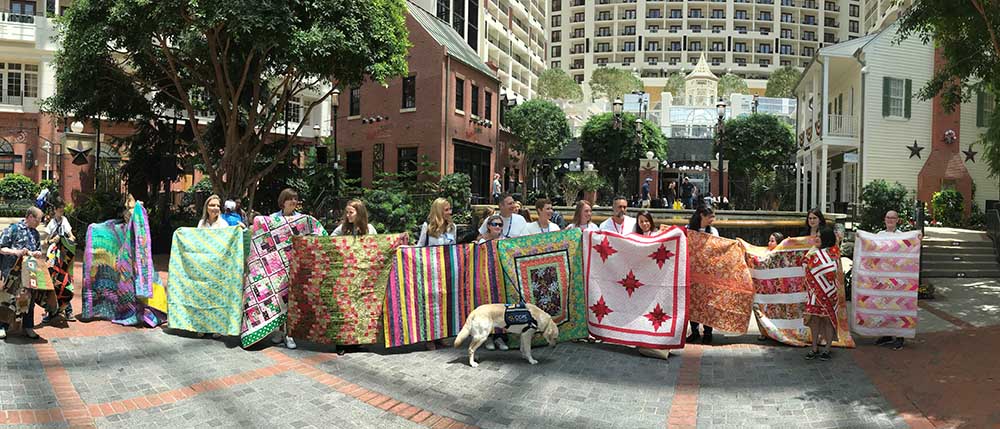
Sometimes fate has a way of playing a part in our lives. Dave Seyfert was studying to be an English teacher when, during his last year of college, a bell choir came to his college to perform. The choir comprised of children with Down Syndrome and Dave was immediately taken with their performance. His interest in special education began that day. He completed a master’s degree in special education and was certified to teach children with visual impairments, and a few years later earned a second master’s degree at Boston College in orientation and mobility.  While earning this degree, Dave lived, worked, and took classes at Perkins School for the Blind in Boston. Today, Dave’s an orientation and mobility specialist who works with blind and low-vision children in schools and communities throughout Long Island. He teaches daily living skills including advanced travel training. Pre-pandemic he’d take children into New York City for trips to Kennedy Airport, the Bronx Zoo, and the Met Cloisters Museum.  Once training is complete, the children may have 200 hours of subway travel, for instance, under their belt. “I’ve taught children with visual impairments for almost 40 years,” says Dave. “I’ve worked closely with ophthalmologists and optometrists and taught many students throughout their public-school careers so they can live more independently.” For someone without vision issues himself, Dave knows more about the effects of vision loss on daily living than most people. In 2006, Dave’s son was diagnosed with autoimmune polyglandular syndrome type 1 (APS-1), a rare disorder characterized by several autoimmune diseases.  It’s a “Sjogren’s-like” syndrome, producing the dry eyes and dry mouth that Sjogren’s patients experience. Between 80 percent and 99 percent of people with APS Type 1 have visual impairment and/or photophobia. (source: (https://rarediseases.info.nih.gov/diseases/8466/autoimmune-polyglandular-syndrome-type-1).  His son also developed immune-mediated keratitis (IMMK), a corneal condition where the immune system attacks corneal tissue. His visual acuities diminished, he developed photophobia (an intolerance to light), and he experienced extreme eye discomfort, with cold, dry, windy days being most challenging to withstand. To combat the discomfort and photophobia, Dave’s son took to staying inside. On the most difficult days he required a humidifier running constantly and lubricating eye drops nearby for continual relief. 2019 international symposium at National Harbor in Washington D.C
Learning about APS-1

APS type 1, also known as APECED in Europe, is rare, affecting 1 in 2 million people, mostly children, and it is not well known.  Dave and his wife, Sherri, co-founded the APS-Type 1 Foundation with the Talarico family to fund research into the underlying cause of vision problems, to educate patients and doctors about the disorder, and to create awareness of the disease.  The collective knowledge of the APS-1 Foundation community yielded immediate benefits. “Within one month of our son’s Sjogren’s diagnosis, one of our Board members recommended BostonSight,” says Dave. “Her daughter had PROSE devices and she recommended we get a consultation. From the get-go, we knew BostonSight was here to help us. The doctors knew exactly what our son was experiencing.  They were so patient, so professional.  I loved that they wanted to get it right.”

The results of PROSE Treatment

Dave’s son received PROSE devices at age 16. With his devices, his photophobia diminished, and he was able to go outside in any weather condition. Additionally, he regained his depth perception thanks to his PROSE devices. “In short, he became untethered!” says Dave. The family had been considered limbal stem cell transplantation prior to PROSE treatment, which is a surgical treatment to restore corneal epithelial cells. These cells aid in maintaining a stable tear film and are critical in corneal healing. But the benefit to PROSE devices is that a patient can have 12-15 hours of continuous tear bathing per day, without surgery.  This continuous hydration lubricates the cornea and promotes healing. As with any treatment, patient compliance is one of the biggest barriers to success. PROSE device application and removal is a learned process. Today, Dave’s son is an expert at applying and removing his PROSE devices. “He can insert his lenses in 15 seconds while riding as a passenger in a moving car,” Dave says. Dave’s son is now a college student studying studio art, where his classes can top 3 hours at a time. Ophthalmologists and corneal specialists often don’t know about PROSE treatment, and BostonSight is working to change that. Thanks to people like Dave, more and more patients and practitioners are learning about PROSE. “BostonSight has preserved our son’s vision. Our corneal specialist calls BostonSight ‘eye-savers’. We call them a game-changer. I don’t know where my son would be without BostonSight.  From our experience, APS Type 1 patients with Sjogren’s-like symptoms would benefit from PROSE devices. I encourage patients to reach out to their vision specialist about the many benefits of PROSE devices or to contact BostonSight directly.” Learn more about the APS-1 Foundation at https://apstype1.org/    

https://www.bostonsight.org/wp-content/uploads/2026/06/Dave-Seyfert_APS1-Group-Photo.jpg 1000 1504 michele /wp-content/uploads/2026/05/bostonsight-logo.svg michele2021-07-01 20:16:352026-06-18 11:10:51BostonSight PROSE Preserved Our Son’s Vision

Pages

  • About
  • Clinical Trials and R&D Services
  • Conditions We Treat
  • Contact Us
  • Dry Eye
  • Education
  • Find a PROSE Clinic
  • FitAcademy
  • FitAcademy for Residents
  • FitAcademy Immersive
  • FitAcademy International
  • GVHD
  • Home
  • Keratoconus
  • Manufacturing
  • Needham PROSE Clinic
  • News
  • Notice of Privacy Practices for Patients
  • Ophthalmology Resident Lectures
  • Our Approach
  • Our Partners
  • Our People
  • Our Products
  • Patient Care
  • Patient Information Booklet
  • Patient Resources
  • Patient Stories
  • Pediatrics
  • Post-Corneal Transplant
  • Post-LASIK
  • Practitioner IFU
  • Privacy Policy
  • PROSE Provider Payment Form
  • PROSE Treatment
  • Publications
  • Research
  • Research Studies
  • Sjögren’s Disease
  • Software Platforms
  • Stevens-Johnson Syndrome
  • Technology
  • Terms of Use
  • Visiting Clinicians
  • Ways to Support Us

Categories

  • Blog Posts
  • Clinic Updates
  • In the Media
  • Patient Stories
  • Press Release
  • PROSE
  • SCLERAL
  • Uncategorized

Archive

  • August 2026
  • July 2026
  • May 2026
  • April 2026
  • March 2026
  • February 2026
  • January 2026
  • December 2025
  • October 2025
  • September 2025
  • August 2025
  • July 2025
  • June 2025
  • May 2025
  • January 2025
  • November 2024
  • October 2024
  • September 2024
  • July 2024
  • June 2024
  • May 2024
  • April 2024
  • March 2024
  • February 2024
  • January 2024
  • December 2023
  • November 2023
  • October 2023
  • September 2023
  • August 2023
  • July 2023
  • May 2023
  • March 2023
  • February 2023
  • December 2022
  • November 2022
  • October 2022
  • September 2022
  • July 2022
  • June 2022
  • May 2022
  • April 2022
  • February 2022
  • January 2022
  • December 2021
  • November 2021
  • October 2021
  • September 2021
  • August 2021
  • July 2021
  • June 2021
  • May 2021
  • April 2021
  • March 2021
  • February 2021
  • January 2021
  • December 2020
  • November 2020
  • October 2020
  • September 2020
  • July 2020
  • June 2020
  • March 2020
  • Patient Care
    • PROSE Treatment
    • Find a PROSE Clinic
    • Conditions We Treat
    • Patient Stories
    • Patient Resources
    • Pediatrics
  • Technology
    • Our Products
    • Software Platforms
    • Manufacturing Lab
  • Education
    • Visiting Clinicians
    • FitAcademy International
    • FitAcademy for Residents
    • FitAcademy Immersive
    • Ophthalmology Resident Lectures
  • Research
    • Clinical Trials and R&D Services
    • Research Studies
    • Publications
  • About
    • Our Approach
    • News
    • Our People
    • Partners
  • Needham PROSE Clinic
  • Donate
  • Contact Us

BostonSight is a proud member of the Contact Lens Manufacturers Association and Supporter of the GP Lens Institute.

© 2026 BostonSight. All rights reserved.

Privacy PolicyTerms of Use

Scroll to top Scroll to top Scroll to top
This website uses cookies to improve your experience. We'll assume you're ok with this, but you can opt-out if you wish. Cookie settings ACCEPT
Privacy & Cookies Policy

Privacy Overview

This website uses cookies to improve your experience while you navigate through the website. Out of these cookies, the cookies that are categorized as necessary are stored on your browser as they are essential for the working of basic functionalities of the website. We also use third-party cookies that help us analyze and understand how you use this website. These cookies will be stored in your browser only with your consent. You also have the option to opt-out of these cookies. But opting out of some of these cookies may have an effect on your browsing experience.
Necessary
Always Enabled

Necessary cookies are absolutely essential for the website to function properly. This category only includes cookies that ensures basic functionalities and security features of the website. These cookies do not store any personal information.

Non Necessary

Any cookies that may not be particularly necessary for the website to function and is used specifically to collect user personal data via analytics, ads, other embedded contents are termed as non-necessary cookies. It is mandatory to procure user consent prior to running these cookies on your website.

Save & Accept