• Needham PROSE Clinic
  • Find a PROSE Clinic
  • Donate
  • Contact Us
  • Patient Care
    • PROSE Treatment
    • Find a PROSE Clinic
    • Conditions We Treat
    • Patient Stories
    • Patient Resources
    • Pediatrics
  • Technology
    • Our Products
    • Software Platforms
    • Manufacturing
  • Education
    • Visiting Clinicians
    • FitAcademy International
    • FitAcademy for Residents
    • FitAcademy Immersive
    • Ophthalmology Resident Lectures
  • Research
    • Clinical Trials and R&D Services
    • Research Studies
    • Publications
  • About
    • Our Approach
    • News
    • Our People
    • Our Partners
  • Needham PROSE Clinic
  • Find a PROSE Clinic
  • Donate
  • Contact Us
  • Click to open the search input field Click to open the search input field Search
  • Menu Menu

The Link Between Dry Eye Syndrome and Seasonal Allergies

July 22, 2024/0 Comments/in Blog Posts, PROSE/by michele
*This article is a guideline only and is not to be construed as medical advice. Always contact your eye care doctor with questions and for treatment options.

Understanding Dry Eye Syndrome 

Dry eye syndrome is a common condition that occurs when the eyes are unable to maintain a healthy layer of tears, also known as the tear film. This can lead to eye irritation, redness, and discomfort, as well as blurry vision or even vision loss. Seasonal allergies, on the other hand, occur when the immune system reacts to allergens such as pollen, mold, or dust, leading to symptoms like sneezing, itching, and watery eyes.

Exploring the Connection 

Many people experience a connection between dry eye syndrome and seasonal allergies. During allergy season, allergens can trigger inflammation in the eyes, leading to an increase in tear production. However, the quality of these tears may not be sufficient to keep the eyes properly lubricated, resulting in symptoms of dry eye syndrome. This combination of increased tear production and inadequate lubrication can exacerbate the discomfort experienced by individuals with both conditions.

Managing Symptoms 

For individuals experiencing both dry eye syndrome and seasonal allergies, it is essential to seek proper management strategies. Over-the-counter artificial tear solutions can help provide relief by supplementing natural tear production. Additionally, avoiding allergens and using antihistamine eye drops can help alleviate the symptoms associated with seasonal allergies. However, anti-histamine eye drops may exacerbate eye dryness, so the treatments must be carefully balanced by working with your eye care doctor.

Seeking Professional Guidance 

If you suspect that you may have both dry eye syndrome and seasonal allergies, it is crucial to consult an eye care doctor for a comprehensive evaluation. An eye care doctor can assess the severity of your symptoms and recommend a tailored treatment plan to address both conditions effectively. This may include prescription eye drops, lifestyle modifications, or other interventions to manage the symptoms and improve overall eye health, including PROSE treatment. PROSE treatment uses specially designed prosthetic scleral lenses that vault over the corneal surface, creating a reservoir between the cornea and the lens. The reservoir is filled with preservative-free saline to bathe and hydrate the eye all day, providing immediate relief and comfort, and promoting healing. PROSE prosthetic lenses can also provide improved vision. Think of the lens as a “new” cornea, which creates the shape of a typical, healthy cornea. This allows light to enter the eye at the correct angle for excellent vision. The link between dry eye syndrome and seasonal allergies is a significant consideration for individuals experiencing discomfort and irritation in their eyes. By understanding the connection between these conditions and seeking appropriate management strategies that work together, you can take proactive steps to alleviate your symptoms and improve overall eye health.
/wp-content/uploads/2026/05/bostonsight-logo.svg 0 0 michele /wp-content/uploads/2026/05/bostonsight-logo.svg michele2024-07-22 12:57:072024-07-22 12:57:07The Link Between Dry Eye Syndrome and Seasonal Allergies

What is a Corneal Transplant?

July 22, 2024/0 Comments/in Blog Posts, PROSE/by michele
*This article is a guideline only and is not to be construed as medical advice. Always contact your eye care doctor with questions and for treatment options. A corneal transplant, also known as corneal grafting or keratoplasty, is a surgical procedure that involves replacing a damaged or diseased cornea with a healthy donor cornea. The cornea is the transparent, dome-shaped tissue that covers the front of the eye, allowing light to enter and helping to focus it properly. When the cornea becomes damaged due to injury, infections, or diseases like keratoconus, vision can be severely impaired, and a cornea transplant may be necessary to restore sight.

The Procedure

Before the surgery, the donor cornea is meticulously evaluated for quality to help ensure a successful transplant. During the procedure, the surgeon carefully removes the central portion of the damaged cornea and replaces it with the donated cornea.  The new cornea is then secured into proper position using tiny, thread-like sutures.

Recovery and Post-Operative Care

After the procedure, the patient is prescribed medications, including antibiotics and corticosteroids, to prevent infection and reduce inflammation. Regular follow-up appointments with the surgeon are crucial to monitor the healing process and ensure the eye is responding well to the transplant. It is common for vision to be initially blurry or distorted, but as the eye heals and the sutures are gradually removed, visual acuity improves.

Success and Risks 

Corneal transplant surgery is generally a safe and effective procedure, with a high success rate. However, like any surgical procedure, there are risks involved. These risks may include:
  • infection,
  • rejection of the donor cornea,
  • astigmatism, and
  • glaucoma.
It is essential to discuss these potential risks with your doctor and to follow all post-operative instructions carefully to minimize the chances of complications.

Conclusion 

A corneal transplant is a surgical procedure that helps restore vision in individuals with damaged or diseased corneas. By replacing the damaged cornea with a healthy donor cornea, corneal transplant offers hope to those suffering from vision loss. While the surgery is generally considered safe there are notable risks. However, PROSE treatment may prevent the need for a corneal transplant.  If you are experiencing vision problems due to corneal damage or disease, consult an eye care doctor to determine if a cornea transplant or another treatment, such as PROSE, ma be right for you. Links to literature outlining PROSE success:
  1. Fluid-ventilated, gas-permeable scleral contact lens is an effective option for managing severe ocular surface disease and many corneal disorders that would otherwise require penetrating keratoplasty:  http://www.ncbi.nlm.nih.gov/pubmed/15894881
  2. Treatment of persistent corneal epithelial defect with overnight wear of a prosthetic device for the ocular surface: https://pubmed.ncbi.nlm.nih.gov/24075432/
  3. Early Postoperative Therapeutic Scleral Lens Intervention for Penetrating Keratoplasty Complications in Atopic Keratoconjunctivitis:  https://pubmed.ncbi.nlm.nih.gov/37167589/
  4. Improvement of chronic corneal opacity in ocular surface disease with prosthetic replacement of the ocular surface ecosystem (PROSE) treatment:  https://pubmed.ncbi.nlm.nih.gov/29552666/
/wp-content/uploads/2026/05/bostonsight-logo.svg 0 0 michele /wp-content/uploads/2026/05/bostonsight-logo.svg michele2024-07-22 11:48:332024-07-22 11:48:33What is a Corneal Transplant?

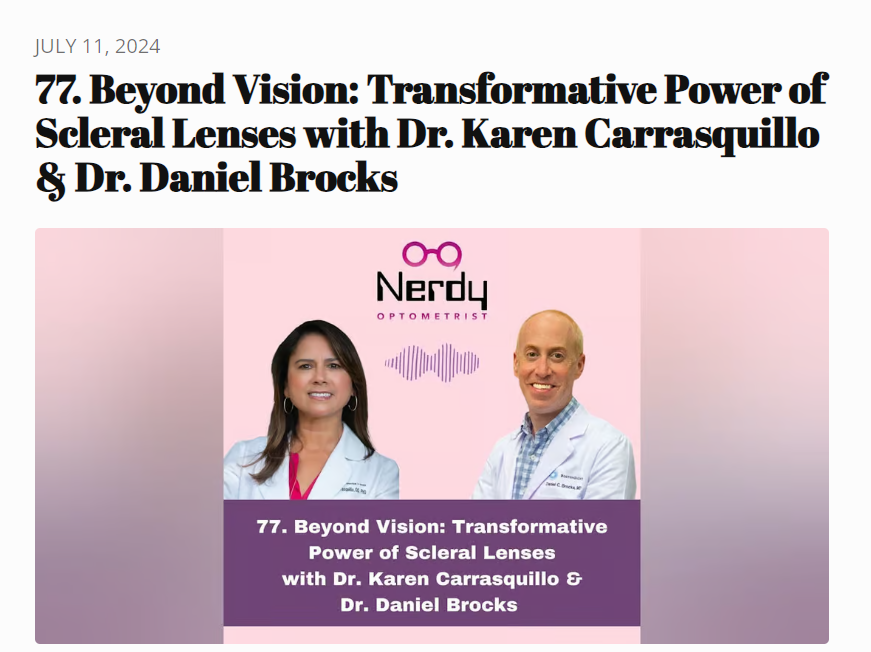
Dr. Karen Carrasquillo and Dr. Daniel Brocks Featured on Nerdy Optometrist Podcast

July 11, 2024/0 Comments/in Blog Posts, In the Media, PROSE, SCLERAL/by michele
BostonSight’s Dr. Karen Carrasquillo, Senior VP of Clinical and Professional Affairs, and Dr. Daniel C. Brocks, Chief Medical Officer, joined the Nerdy Optometrist podcast to talk all things BostonSight. Some episode highlights include:
  1. How Dr. Carrasquillo and Dr. Brocks found their passion for eye care.
  2. Their inspiring journeys with BostonSight.
  3. The remarkable differences between PROSE® and BostonSight SCLERAL® lenses.
  4. Heartwarming stories and experiences with BostonSight lenses.
  5. The biggest challenges in fitting and adapting scleral lenses.
  6. BostonSight’s global initiatives to increase access to scleral lenses.
Listen to the podcast here.  
https://www.bostonsight.org/wp-content/uploads/2026/06/Nerdy-Optometrist-77.png 652 871 michele /wp-content/uploads/2026/05/bostonsight-logo.svg michele2024-07-11 13:04:062026-06-18 11:11:53Dr. Karen Carrasquillo and Dr. Daniel Brocks Featured on Nerdy Optometrist Podcast

Debunking Common Myths About Dry Eye Syndrome

July 10, 2024/0 Comments/in Blog Posts, PROSE/by michele
*This article is a guideline only and is not to be construed as medical advice. Always contact your eye care doctor with questions and for treatment options. Dry eye syndrome is a common condition that affects millions of people worldwide. Despite its prevalence, there are many misconceptions and myths surrounding this condition. Here we will debunk some of the most common myths about dry eye syndrome and provide information to help you better understand and manage this condition.

Myth #1: Dry Eye Syndrome Only Affects Older People

It is a widely believed misconception that only older individuals suffer from dry eye syndrome. In reality, dry eye syndrome affects people of all ages, including children and young adults. Factors such as prolonged screen time, contact lens wear, and certain medical conditions can contribute to the development of dry eyes at a younger age.

Myth #2: Using Eye Drops Will Cure Dry Eye Syndrome

While using eye drops can provide temporary relief from dry eye symptoms, they do not cure the underlying cause of the condition. Dry eye syndrome is often caused by a lack of sufficient tears or poor tear quality, and simply adding artificial tears may not address the root issue. It is essential to consult with an eye care doctor to determine the most appropriate treatment for your specific condition.

Myth #3: Dry Eye Syndrome Is Not a Serious Condition

Some people believe dry eye syndrome is merely a minor annoyance and not a serious medical condition. However, untreated dry eye syndrome can lead to significant discomfort, vision disturbances, vision loss, and even corneal damage in severe cases. It is crucial to take dry eye symptoms seriously and seek proper diagnosis and management from a qualified eye care doctor.

Myth #4: Dry Eye Syndrome Is Always Characterized by Dryness

Contrary to popular belief, not all individuals with dry eye syndrome experience a sensation of dryness in their eyes. Some people with this condition may have excessive tearing or watery eyes as their primary symptom. This is known as reflex tearing, and it can occur because the eyes overcompensate for the lack of sufficient natural tears.

Myth #5: Using a Humidifier Will Solve Dry Eye Syndrome

While using a humidifier can help create a more comfortable indoor environment, it is not a foolproof solution for addressing dry eye syndrome. Dry eye symptoms are influenced by numerous factors, including environmental conditions, tear production, and eyelid function. While a humidifier may offer some relief, it is not a substitute for a comprehensive dry eye treatment plan tailored to your specific needs.

Conclusion

By debunking common myths about dry eye syndrome, we hope to bring a better understanding of this condition and encourage you to seek professional guidance for proper management. Understanding the nature of dry eye syndrome can help you make informed decisions about your eye health and overall well-being. If you suspect you may have dry eye syndrome, consult with an eye care doctor to receive personalized care and support. While there is no cure for moderate to severe dry eye, PROSE treatment can put you on the path to greater comfort and vision. PROSE treatment uses specially designed prosthetic scleral lenses that vault over the corneal surface, creating a reservoir between the cornea and the lens. The reservoir is filled with preservative-free saline to bathe and hydrate the eye all day, providing immediate relief and comfort, and promoting healing. PROSE prosthetic lenses can also provide improved vision. Think of the lens as a “new” cornea, which creates the shape of a typical, healthy cornea. This allows light to enter the eye at the correct angle for improved vision.  
/wp-content/uploads/2026/05/bostonsight-logo.svg 0 0 michele /wp-content/uploads/2026/05/bostonsight-logo.svg michele2024-07-10 12:40:202024-07-10 12:40:20Debunking Common Myths About Dry Eye Syndrome

Overcoming Challenges: Coping with Complications Following Corneal Transplant

July 8, 2024/0 Comments/in Blog Posts, PROSE/by michele
*This article is a guideline only and is not to be construed as medical advice. Always contact your eye care doctor with questions and for treatment options. Undergoing a corneal transplant can be a life-changing procedure that restores vision and improves the quality of life for individuals with certain eye conditions. However, like any surgical procedure, it can come with challenges and potential complications. Here we explore some common difficulties you may encounter following a cornea transplant and discuss effective coping strategies to overcome them.

The Initial Recovery Period: Patience is Key

After a corneal transplant, the body needs time to adjust and heal. It is important to remember that the recovery process can be gradual and can vary from person to person. Patience is crucial during this period, as it takes time for the transplanted cornea to integrate fully with the recipient’s eye. Following your doctor’s instructions is vital to ensure a smooth recovery. Use any medications or treatments as prescribed by your doctor, avoid rubbing your eyes, and protect your eyes from potential irritants. If you have any concerns or notice unusual symptoms, promptly communicate with your eye care doctor to address them effectively.

Rejection: Early Detection and Timely Intervention

One of the most significant challenges post-corneal transplant is the risk of rejection. Rejection can occur when the patient’s immune system recognizes the transplanted cornea as a foreign object and attacks it. Prompt identification and treatment are crucial to prevent irreversible damage. Regular follow-up appointments with your eye specialist are essential for monitoring the health of your transplanted cornea. Any signs of decreased vision, increased sensitivity to light, redness, or pain should be reported immediately. Your doctor may perform various tests to evaluate the condition of the transplant and may prescribe medications to suppress your immune system to prevent rejection.

Emotional Support: Seek Understanding and Guidance

Going through a corneal transplant can be emotionally challenging. It is essential to seek support from your loved ones, friends, or even professional counselors who can provide a listening ear and offer guidance during this journey. Joining support groups or online communities dedicated to cornea transplant recipients can also provide a valuable platform to share experiences, gain insights, and find solace in knowing you are not alone. Connecting with others who have faced similar challenges can be empowering and help you navigate the emotional aspects of your recovery.

Managing Post-Transplant Complications: Communication is Key

Complications following corneal transplant can vary and may include infection, elevated intraocular pressure, astigmatism, or even graft failure. It is vital to maintain open and transparent communication with your healthcare team to address these challenges effectively. If you experience pain, worsening vision, or any other concerning symptoms, reach out to your healthcare provider immediately. If you experience these symptoms, PROSE may be the right next step for you. PROSE can provide pain relief and improved vision and may reduce or alleviate the need for surgery.
/wp-content/uploads/2026/05/bostonsight-logo.svg 0 0 michele /wp-content/uploads/2026/05/bostonsight-logo.svg michele2024-07-08 11:50:472024-07-08 11:50:47Overcoming Challenges: Coping with Complications Following Corneal Transplant

Understanding Stevens-Johnson Syndrome: Causes, Symptoms, and Treatment Options

July 1, 2024/0 Comments/in Blog Posts, PROSE/by michele
*This article is a guideline only and is not to be construed as medical advice. Always contact your eye care doctor with questions and for treatment options. Stevens-Johnson Syndrome (SJS) is a rare but serious medical condition that affects the skin and mucous membranes, often triggered by medications or infections. Understanding the causes, symptoms, and available treatment options for SJS is crucial for both awareness and timely intervention. Here we delve into the intricacies of SJS to provide valuable insights into its complexities.

Causes of Stevens-Johnson Syndrome

  1. Medication Triggers: The majority of SJS cases are triggered by medications, most commonly antibiotics, anticonvulsants, and nonsteroidal anti-inflammatory drugs (NSAIDs). It is essential to be aware of potential drug reactions and consult with healthcare professionals about any concerns.
  2. Infections: Infections, particularly viral infections like herpes, can also serve as triggers for SJS. Understanding the importance of addressing infections promptly can contribute to preventing the onset of this severe condition.

Symptoms of Stevens-Johnson Syndrome

  1. Skin Rash and Lesions: One of the hallmark symptoms of SJS is a widespread skin rash that often begins with red or purple spots and progresses to blisters. The skin may peel off, resembling a severe burn.
  2. Mucous Membrane Involvement: SJS affects mucous membranes, leading to painful sores in areas such as the mouth, eyes, genitals, and respiratory tract. This involvement can result in difficulties with eating, breathing, and speaking.
  3. Flu-like Symptoms: Individuals with SJS may experience flu-like symptoms such as fever, fatigue, and general malaise. Recognizing these symptoms alongside skin and mucous membrane changes is crucial for early detection.

Treatment Options for Stevens-Johnson Syndrome 

  1. Hospitalization and Supportive Care: SJS requires immediate medical attention and often necessitates hospitalization and ICU care. Supportive care, including intravenous fluids, pain management, and careful monitoring, is crucial during the acute phase.
  2. Identification and Withdrawal of Triggering Agents: Identifying and discontinuing use of the triggering medication or addressing the underlying infection is a critical step in SJS. Prompt action can prevent the condition from worsening.
  3. Topical Treatments: Topical treatments, such as cool compresses and soothing ointments, can provide relief for the skin and mucous membranes affected by SJS. These measures aim to minimize discomfort and promote healing.
  4. Immune System Modulators: In some cases, healthcare professionals may use immune system modulators to manage the inflammatory response associated with SJS.
  5. Long-term Care and Rehabilitation: Survivors of SJS may require long-term care and rehabilitation, especially if the condition has resulted in significant skin and mucous membrane damage. Follow-up care is essential to address ongoing medical needs and ensure optimal recovery.
  6. PROSE Treatment: PROSE treatment uses specially designed prosthetic scleral lenses that vault over the corneal surface, creating a reservoir between the cornea and the lens. The reservoir is filled with preservative-free saline to bathe and hydrate the eye all day, providing immediate relief and comfort, and promoting healing. PROSE prosthetic lenses can also provide improved vision. Think of the lens as a “new” cornea, which creates the shape of a typical, healthy cornea. This allows light to enter the eye at the correct angle for improved vision.
While SJS is a rare condition, understanding its causes, recognizing symptoms, and seeking immediate medical attention can make a significant difference in the outcome. If you suspect SJS or experience adverse reactions to medications, consult with healthcare professionals promptly. Awareness and education about SJS are crucial for fostering a proactive approach to this potentially life-threatening condition.
/wp-content/uploads/2026/05/bostonsight-logo.svg 0 0 michele /wp-content/uploads/2026/05/bostonsight-logo.svg michele2024-07-01 13:21:372024-07-01 13:21:37Understanding Stevens-Johnson Syndrome: Causes, Symptoms, and Treatment Options

Pages

  • About
  • Clinical Trials and R&D Services
  • Conditions We Treat
  • Contact Us
  • Dry Eye
  • Education
  • Find a PROSE Clinic
  • FitAcademy
  • FitAcademy for Residents
  • FitAcademy Immersive
  • FitAcademy International
  • GVHD
  • Home
  • Keratoconus
  • Manufacturing
  • Needham PROSE Clinic
  • News
  • Notice of Privacy Practices for Patients
  • Ophthalmology Resident Lectures
  • Our Approach
  • Our Partners
  • Our People
  • Our Products
  • Patient Care
  • Patient Information Booklet
  • Patient Resources
  • Patient Stories
  • Pediatrics
  • Post-Corneal Transplant
  • Post-LASIK
  • Practitioner IFU
  • Privacy Policy
  • PROSE Provider Payment Form
  • PROSE Treatment
  • Publications
  • Research
  • Research Studies
  • Sjögren’s Disease
  • Software Platforms
  • Stevens-Johnson Syndrome
  • Technology
  • Terms of Use
  • Visiting Clinicians
  • Ways to Support Us

Categories

  • Blog Posts
  • Clinic Updates
  • In the Media
  • Patient Stories
  • Press Release
  • PROSE
  • SCLERAL

Archive

  • May 2026
  • April 2026
  • February 2026
  • January 2026
  • December 2025
  • November 2025
  • October 2025
  • September 2025
  • July 2025
  • June 2025
  • May 2025
  • January 2025
  • November 2024
  • October 2024
  • September 2024
  • July 2024
  • June 2024
  • May 2024
  • April 2024
  • March 2024
  • February 2024
  • January 2024
  • December 2023
  • November 2023
  • October 2023
  • September 2023
  • July 2023
  • May 2023
  • March 2023
  • February 2023
  • December 2022
  • November 2022
  • October 2022
  • September 2022
  • July 2022
  • June 2022
  • May 2022
  • April 2022
  • February 2022
  • January 2022
  • December 2021
  • November 2021
  • October 2021
  • September 2021
  • August 2021
  • July 2021
  • June 2021
  • May 2021
  • April 2021
  • March 2021
  • February 2021
  • January 2021
  • December 2020
  • November 2020
  • October 2020
  • September 2020
  • July 2020
  • June 2020
  • March 2020
  • Patient Care
    • PROSE Treatment
    • Find a PROSE Clinic
    • Conditions We Treat
    • Patient Stories
    • Patient Resources
    • Pediatrics
  • Technology
    • Our Products
    • Software Platforms
    • Manufacturing Lab
  • Education
    • Visiting Clinicians
    • FitAcademy International
    • FitAcademy for Residents
    • FitAcademy Immersive
    • Ophthalmology Resident Lectures
  • Research
    • Clinical Trials and R&D Services
    • Research Studies
    • Publications
  • About
    • Our Approach
    • News
    • Our People
    • Partners
  • Needham PROSE Clinic
  • Donate
  • Contact Us

© 2026 BostonSight. All rights reserved.

Privacy PolicyTerms of Use

Scroll to top Scroll to top Scroll to top
This website uses cookies to improve your experience. We'll assume you're ok with this, but you can opt-out if you wish. Cookie settings ACCEPT
Privacy & Cookies Policy

Privacy Overview

This website uses cookies to improve your experience while you navigate through the website. Out of these cookies, the cookies that are categorized as necessary are stored on your browser as they are essential for the working of basic functionalities of the website. We also use third-party cookies that help us analyze and understand how you use this website. These cookies will be stored in your browser only with your consent. You also have the option to opt-out of these cookies. But opting out of some of these cookies may have an effect on your browsing experience.
Necessary
Always Enabled

Necessary cookies are absolutely essential for the website to function properly. This category only includes cookies that ensures basic functionalities and security features of the website. These cookies do not store any personal information.

Non Necessary

Any cookies that may not be particularly necessary for the website to function and is used specifically to collect user personal data via analytics, ads, other embedded contents are termed as non-necessary cookies. It is mandatory to procure user consent prior to running these cookies on your website.

Save & Accept