• Needham PROSE Clinic
  • Find a PROSE Clinic
  • Donate
  • Contact Us
  • Patient Care
    • PROSE Treatment
    • Find a PROSE Clinic
    • Conditions We Treat
    • Patient Stories
    • Patient Resources
    • Pediatrics
  • Technology
    • Our Products
    • Software Platforms
    • Manufacturing
  • Education
    • Visiting Clinicians
    • FitAcademy International
    • FitAcademy for Residents
    • FitAcademy Immersive
    • Ophthalmology Resident Lectures
  • Research
    • Clinical Trials and R&D Services
    • Research Studies
    • Publications
  • About
    • Our Approach
    • News
    • Our People
    • Our Partners
  • Needham PROSE Clinic
  • Find a PROSE Clinic
  • Donate
  • Contact Us
  • Click to open the search input field Click to open the search input field Search
  • Menu Menu

Keratoconus Doesn’t Stop Loni Smith From Writing a Bestselling Craft Book

February 22, 2024/0 Comments/in Blog Posts, Patient Stories/by michele
The child of an army officer and later an Air Force officer’s wife, Loni Smith has moved 49 times in her life. She is used to change, making new friends, finding newLoni Smith headshot doctors. But one unexpected change led to a life-long quest for better vision–keratoconus, a progressive thinning of the cornea that can cause the cornea to bulge into a conical shape, refracting light incorrectly and causing higher order aberrations, such as double vision. Loni has spent her life making things, starting at age 5. She had always done something with her hands, such as knitting and sewing, and she has a bachelor’s degree in textiles and clothing. Her first craft book was published in 1970, and she wrote 11 more books in the following years. In between moves, Loni started teaching part-time adult education classes. But with keratoconus, she spent almost 30 years of her life where she could not see well enough to stitch. “I made a life without stitching. I went to law school. As a professor, I taught business law and business management for 30 years. I took up a variety of arts and crafts, but my life without needlepoint was not fulfilling. Needlepoint had fed my soul.”


Seeing Double

At age 28, while living in Kansas City, she began to see double when reading. Curious, she went to the eye doctor who held up a sign. “How many dots do you see?” he asked. Loni counted and counted and counted. Her slow pace aggravated the doctor who asked, “How MANY dots do you see??” “I’m still counting,” Loni replied. There was only one dot on the sign. Loni was shocked. She had been driving fine, but the double vision she was encountering occurred only when she looked at things close up, such as letters and numbers. She didn’t have a diagnosis however, so she was referred to Johns Hopkins’ Wilmer Eye Institute in Maryland. There she was diagnosed with keratoconus, which was considered rare then, and was prescribed corneal rigid gas permeable lenses (RGPs), which were the only contact lenses available at the time. She and her husband headed to Alaska for their next assignment. Her RGP hard contact lenses kept giving her corneal abrasions, and the doctor in Alaska struggled to fit her with better lenses. The Air Force flew her to Fort Lewis, an army post near Tacoma, Washington, where, coincidentally, her father’s best friend was Chief of Medicine. The ophthalmologist on staff fit a new RGP lens on both of Loni’s eyes, then placed the order with a lens manufacturer in Seattle, some 40 miles away. The Chief found Loni a place to stay and lent her his car. She drove to the manufacturer, picked up the lenses, returned to Tacoma, wore the lenses for the day, and the next morning the ophthalmologist tweaked the prescription. She did this every day for a month while friends pitched in to help her husband care for their 14-month-old son back in Alaska. At the end of the month, she could finally see well. Fitting a contact lens over a keratoconus-infected cornea at the time was more art than science. “Then, I wrote The Needlepoint Book, which came out in 1976,” Loni says. “It made a huge splash because there was nothing like it.”

Corneal Transplants

For the next few years, Loni continued to create. She appeared on local talk shows to speak about The Needlepoint Book and needlepoint shops hired her to teach. When she was in larger cities, her publisher set up television and bookstore appearances. She was living a career beyond her dreams. But keratoconus is progressive, and eventually, she needed corneal transplants, twice in each eye. “The first time I was told I needed a transplant there were only three doctors in the world doing them successfully – they were renowned for corneal transplants: one at Johns Hopkins, one at the University of Florida, and one at Mass Eye and Ear.” Although her cornea transplant surgeries were not very painful, each time it was a full year before she could use RGP lenses again, as they touch the cornea. She also had dozens of cornea rejections. Doctors prescribed steroids every half hour when a rejection would start. Excess steroids cause cataracts, so when she was just 40 years old, she also had cataract surgery, normally a procedure for the elderly. Her first corneal transplant was in 1979 and her last was in 2005. Intermittently, for 15 years, she lived with vision in just one of her eyes, as doctors toggled between transplants.

Finding PROSE

Despite the transplants, her visual acuity continued to drop. At night she could only see a halo of lights. Her RGPs provided some visual improvement to 20/40 and 20/60, but the lens in Loni’s best eye continued to pop out and did so one night while she was driving. She had to pull over and call her husband to get her home. Then, in 2009, Johns Hopkins told her “Something out of Boston may be able to help you.”
Whimsical needlepoint project completed in 2024 of a pig with a mask from COVID wearing a dress and walking to the market

A whimsical needlepoint project Loni completed in 2024. This little piggy going to market during Covid.


Loni visited Boston Foundation for Sight [now BostonSight] for a month, getting one to two lenses made every day. It took many fittings, but the doctors did not give up. The PROSE device restored her vision to 20/15, which she needed to stitch.

Finding Fulfillment

“My needlepoint career continued successfully. Shops and tradeshows hired me to teach again. At one tradeshow, I met a woman who said, ‘I’m your publisher.’ She wanted me to revise The Needlepoint Book again, so it has had multiple editions. The book is 48 years old and I’m still having book signings! Just two weeks ago I had a book signing near Daytona Beach.” “If not for the PROSE device I would be functionally blind. That is not an exaggeration. Everything I do to enrich my life is visual. I wouldn’t have had the life that fed my soul if it hadn’t been for the PROSE device.” The Needlepoint Book can be found online here. (Jo Ippolito Christensen is Loni Smith’s pen name.)

DONATE TODAY

https://www.bostonsight.org/wp-content/uploads/2026/06/Loni-Smith.jpg 500 409 michele /wp-content/uploads/2026/05/bostonsight-logo.svg michele2024-02-22 13:21:492026-06-18 11:11:45Keratoconus Doesn’t Stop Loni Smith From Writing a Bestselling Craft Book

PROSE Treatment Success Rates

February 16, 2024/0 Comments/in Blog Posts, PROSE/by michele
In 2024, we surveyed 2,000 PROSE patients with ocular surface disease. The survey respondents reported high success rates, however, 62% of respondents reported they waited 3 or more years for a PROSE referral. Given the high success rate of PROSE, we hope to improve awareness of PROSE treatment earlier in individuals’ eye care journeys, both for patients and their referring specialists.

Results

Percent of survey respondents who reported that their eye health and vision improved after getting PROSE:
  • Overall = 95%
  • Dry eye = 87%
  • Keratoconus = 98%
  • Corneal transplant/scarring = 93%
  • Exposure = 77%
  • Ocular GVHD = 97%
  • Sjögren’s: = 100%
  • SJS/TENS = 100%
  • Post-LASIK = 100%
Percent of survey respondents who reported that their quality of life improved after getting PROSE:
  • Overall = 96%
  • Dry eye = 87%
  • Keratoconus = 98%
  • Corneal transplant/scarring = 95%
  • Exposure = 92%
  • Ocular GVHD = 97%
  • Sjögren’s: = 100%
  • SJS/TENS = 100%
  • Post-LASIK = 100%
https://www.bostonsight.org/wp-content/uploads/2026/06/PROSE_by-BostonSight_RGB.png 264 768 michele /wp-content/uploads/2026/05/bostonsight-logo.svg michele2024-02-16 14:15:352026-06-18 11:11:45PROSE Treatment Success Rates

Corneal Cross Linking: A Breakthrough Treatment for Keratoconus

February 15, 2024/0 Comments/in PROSE/by michele
This article is a guideline and should not be construed as medical advice. Always contact your eye care doctor with questions and for treatment options. In recent years, the field of ophthalmology has witnessed remarkable advancements in the treatment of various eye conditions, and one such breakthrough is Corneal Cross-Linking (CXL) for keratoconus. This innovative procedure has proven to be a game-changer, offering hope to individuals suffering from this progressive eye disorder. In this article, we will explore the intricacies of Corneal Cross-Linking, its benefits, and why it has become a widely acclaimed treatment for Keratoconus.

Understanding Keratoconus

Keratoconus is a corneal disorder characterized by the thinning and bulging of the cornea, leading to distorted vision. This condition often manifests during adolescence or early adulthood and can progress over time, causing significant visual impairment. Traditionally, treatment options were limited, and individuals with keratoconus faced the possibility of corneal transplantation. However, the advent of Corneal Cross-Linking has revolutionized the approach to managing this condition.

What is Corneal Cross-Linking?

Corneal Cross-Linking is a minimally invasive, outpatient procedure designed to strengthen the cornea and halt the progression of keratoconus. The procedure involves the application of riboflavin (Vitamin B2) eye drops to the cornea, followed by exposure to ultraviolet (UV) light. This combination induces a chemical reaction that strengthens the collagen fibers in the cornea, enhancing its structural integrity.

Benefits of Corneal Cross-Linking 

  • Halt Progression: One of the primary benefits of Corneal Cross-Linking is its ability to halt the progression of keratoconus. By strengthening the cornea, the procedure can prevent further thinning and bulging, preserving visual acuity.
  • Minimally Invasive: Unlike traditional surgical interventions, Corneal Cross-Linking is a minimally invasive procedure that can be performed on an outpatient basis. This reduces the risk of complications and promotes faster recovery.
  • Preservation of Vision: By stabilizing the cornea, CXL helps preserve the patient’s existing vision, reducing the need for more invasive interventions like corneal transplantation. Keep in mind that Corneal Cross-Linking works to halt the progression of keratoconus, and patients may still require PROSE treatment or scleral lenses to provide best vision.
  • Quick Procedure: Corneal Cross-Linking is a relatively quick procedure, typically lasting about one to two hours. Patients can often resume normal activities within a few days, making it a convenient option for those with busy lifestyles.
  • High Success Rates: Numerous clinical studies have demonstrated the effectiveness of Corneal Cross-Linking in preventing the progression of keratoconus. High success rates and positive patient outcomes have contributed to its widespread acceptance within the ophthalmic community.

Conclusion

Corneal Cross-Linking has emerged as a breakthrough treatment for keratoconus, providing hope and improved quality of life for individuals facing the challenges of this progressive corneal disorder. With its ability to halt the progression of the condition, Corneal Cross-Linking stands as a testament to the continuous advancements in ophthalmic care, offering a less invasive and more effective alternative to traditional treatment options. As research and technology continue to evolve, Corneal Cross-Linking is likely to play an increasingly significant role in the management of keratoconus, bringing clarity and vision to those who need it most.
/wp-content/uploads/2026/05/bostonsight-logo.svg 0 0 michele /wp-content/uploads/2026/05/bostonsight-logo.svg michele2024-02-15 15:06:542024-02-15 15:06:54Corneal Cross Linking: A Breakthrough Treatment for Keratoconus

How to Choose the Best Keratoconus Scleral Lens Specialist for Your Needs 

February 15, 2024/0 Comments/in PROSE/by michele
This article is a guideline only and is not to be construed as medical advice. Always contact your eye care doctor with questions and for treatment options. Living with keratoconus can be challenging, but the right scleral lens specialist can make a significant difference in your vision and overall quality of life. Choosing a keratoconus scleral lens specialist requires careful consideration and research. In this guide, we’ll explore the key factors to consider when making this crucial decision to ensure you receive the best care tailored to your unique needs.

Credentials and Expertise

Start by researching the credentials and expertise of potential scleral lens specialists. Look for professionals who have specific training and experience in fitting scleral lenses for keratoconus patients. Board certification and memberships in relevant professional organizations are indicators of a specialist’s commitment to staying updated on the latest advancements in the field.

Patient Reviews and Testimonials

Word of mouth is a powerful tool, especially in healthcare. Search for patient reviews and testimonials about different scleral lens specialists. Platforms like Healthgrades, Yelp, or Google reviews can provide insights into the experiences of other keratoconus patients. Pay attention to reviews that highlight the specialist’s ability to address individual needs and provide personalized care.

Technology and Equipment

Opt for a scleral lens specialist who employs the latest technology and equipment. Advanced diagnostic tools can contribute to a more accurate fitting process, ensuring that your scleral lenses are custom-tailored for optimal comfort and vision correction. Inquire about the technology used during the examination and lens fitting process before making a decision. For example. some scleral lens providers use corneal topography to design lenses.

Communication and Patient Education

Effective communication is vital in any healthcare relationship. Choose a specialist who takes the time to explain the entire process of fitting and maintaining scleral lenses. A knowledgeable specialist will educate you on proper lens care, potential challenges, and what to expect throughout the treatment. This transparency fosters trust and helps you feel more confident in your choice.

Accessibility and Location

Consider the accessibility and location of the scleral lens specialist’s practice. Regular follow-up appointments may be necessary during the initial fitting phase, so choosing a specialist within a reasonable distance is essential. Evaluate the clinic’s hours of operation to ensure they align with your schedule, making it convenient for you to attend appointments without disruptions.

Insurance Coverage and Costs

Check whether the scleral lens specialist is in-network with your insurance provider or if scleral lenses are covered under your vision care or health care insurance. Understanding the costs associated with the initial consultation, fittings, and follow-up appointments is critical. Transparent billing practices and clear communication about potential out-of-pocket expenses will help you plan for the financial aspect of your keratoconus treatment.

Conclusion

Choosing a keratoconus scleral lens specialist involves a combination of research, patient testimonials, and consideration of key factors such as expertise, technology, and communication. Choosing a provider is also dependent on the severity of your condition. While many people with keratoconus will find success with scleral lenses, those with a long history of keratoconus and/or severe cone-shape may find PROSE treatment to be the right solution.  Work with your eye care doctor or corneal specialist to help determine what the right option is for you. You can find a list of PROSE Providers here and a list BostonSight SCLERAL providers here. By investing time and effort in selecting the right specialist, you can embark on a journey towards improved vision and enhanced quality of life. Remember, your eyes deserve the best care, and the right specialist can make all the difference.  
/wp-content/uploads/2026/05/bostonsight-logo.svg 0 0 michele /wp-content/uploads/2026/05/bostonsight-logo.svg michele2024-02-15 15:02:522024-02-15 15:02:52How to Choose the Best Keratoconus Scleral Lens Specialist for Your Needs 

What to Expect When Visiting a Scleral Lens Specialist

February 15, 2024/0 Comments/in PROSE/by michele
This article is a guideline only and is not to be construed as medical advice. Always contact your eye care doctor with questions and for treatment options. Living with keratoconus can be challenging, but advancements in eye care have brought forth effective solutions, one of which is the use of scleral lenses. If you’ve recently been diagnosed with keratoconus or are considering scleral lenses as a treatment option, visiting a specialist is an important step in your journey to better vision. In this article, we’ll explore what you can expect when visiting a keratoconus scleral lens specialist.

Understanding Keratoconus 

Before delving into the specialist visit, it’s important to understand what keratoconus is. Keratoconus is a progressive eye condition in which the cornea thins and bulges into a cone-like shape. This distortion can cause visual impairment, making it challenging to see clearly. Scleral lenses are specially designed lenses that vault over the entire corneal surface, providing a more stable and comfortable vision correction option for individuals with keratoconus. Think of the scleral lens as a “new” cornea, which creates the shape of a typical cornea and allows light to enter the eye at the correct angle for good vision.

The Specialist’s Expertise

A keratoconus scleral lens specialist is an optometrist or ophthalmologist with expertise in fitting and managing scleral lenses. During your visit, the specialist will conduct a comprehensive eye examination to assess the severity of your keratoconus and determine if scleral lenses are the right fit for you.

Customized Fitting Process

One of the key aspects of your visit will be the customized fitting process. Unlike standard contact lenses, scleral lenses are individually crafted to match the unique shape of your eyes. The specialist will use either diagnostic trial lenses or advanced imaging technology to capture detailed measurements, ensuring a precise fit that maximizes comfort and visual acuity.

Lens Insertion and Removal Training 

Using scleral lenses requires a specific technique for insertion and removal. Your specialist will provide hands-on training to ensure you feel confident in handling your lenses at home. This training is crucial for maintaining eye health and preventing complications. The specialist will guide you through the steps, offering tips and tricks to make sure you are successful at home.

Discussion of Maintenance and Care 

Scleral lenses require meticulous cleaning and care to prevent infections and ensure longevity. Your specialist will educate you on the proper cleaning protocols, including the use of recommended cleaning solutions and storage practices. Following these guidelines will contribute to the longevity, safety, and effectiveness of your scleral lenses.

Follow-Up Appointments 

After the initial fitting, expect to schedule follow-up appointments with your eye care doctor. These appointments are essential for monitoring the fit of your lenses, addressing any concerns, and making adjustments as needed. Regular check-ups help ensure your eyes remain healthy and that the scleral lenses continue to provide optimal vision correction.

Conclusion 

Visiting a keratoconus scleral lens specialist is a crucial step towards reclaiming clear vision and improving your quality of life. By understanding the process and what to expect during your visit, you can approach the experience with confidence. Scleral lenses, when fitted and managed by a specialist, offer a transformative solution for individuals with keratoconus, providing comfort, stability, and unparalleled visual clarity. Learn how to choose a keratoconus scleral lens specialist for your needs. 
/wp-content/uploads/2026/05/bostonsight-logo.svg 0 0 michele /wp-content/uploads/2026/05/bostonsight-logo.svg michele2024-02-15 14:59:312024-02-15 14:59:31What to Expect When Visiting a Scleral Lens Specialist

Understanding Keratoconus: A Comprehensive Guide to Causes, Symptoms, and Treatment Options

February 14, 2024/0 Comments/in PROSE/by michele
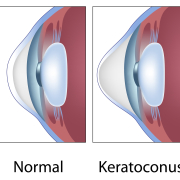
This article is a guideline only and should not be construed as medical advice. Always contact your eye care doctor with questions and for treatment options. image of cornea with keratoconus with cornea bulgingKeratoconus is a progressive eye condition that affects the cornea, which is the clear, dome-shaped front surface of the eye. In individuals with keratoconus, the cornea gradually thins and bulges into a cone-like shape instead of maintaining its normal round curvature. This abnormality can lead to distorted vision and visual impairment.

Causes of Keratoconus 

The exact cause of keratoconus is not well understood, but it is believed to involve a combination of genetic, environmental, and hormonal factors. The condition typically starts during adolescence or early adulthood and progresses over time. Several factors may contribute to the development of keratoconus. These include:
  • Genetics: A family history of keratoconus increases the risk.
  • Eye Rubbing: Constant rubbing of the eyes may contribute to corneal thinning.
  • Connective Tissue Disorders: Conditions such as Ehlers-Danlos syndrome may be linked to keratoconus.
  • Environmental Factors: UV light exposure and oxidative stress may play a role.

How Keratoconus Affects Daily Life 

How keratoconus affects daily life can vary from person to person, but some common effects include:
  • Visual Distortions: Keratoconus often causes blurred and distorted vision. Straight lines may appear wavy, and individuals may experience multiple images, ghosting, or halos around lights.
  • Frequent Changes in Prescription: Due to the progressive nature of keratoconus, individuals may experience frequent changes in their eyeglasses or contact lens prescriptions. Adjustments may be needed to maintain optimal vision.
  • Sensitivity to Light: Some people with keratoconus may become more sensitive to light (photophobia), making it uncomfortable to be in bright or harsh lighting conditions.
  • Difficulty with Night Vision: Reduced contrast sensitivity and increased glare can make driving or navigating in low-light conditions challenging for individuals with keratoconus.
  • Eye Strain and Fatigue: Constantly adjusting to changes in vision can lead to eye strain and fatigue, especially when trying to focus on tasks like reading or using digital screens.
  • Reduced Visual Acuity: In advanced stages of keratoconus, visual acuity may be significantly reduced, impacting overall quality of life and making activities such as driving or recognizing faces more difficult.

Recognizing the Symptoms

Early detection of keratoconus is essential for effective management. Pay attention if you have:
  • Blurred or distorted vision
  • Increased sensitivity to light
  • Frequent changes in prescription glasses or contact lenses
  • Difficulty with night vision
  • Eye irritation and swelling

Diagnosis and Screening 

Eye care doctors use various diagnostic tools, such as corneal topography and tomography, to assess and diagnose keratoconus. Regular eye screenings are crucial, especially for those with a family history of the condition, to detect and manage it at an early stage.

Treatment Options 

The management of keratoconus depends on the severity of the condition. Treatment options include:
  • Glasses or Contact Lenses: Initially, in the earlier stages, individuals may use glasses or contact lenses to correct vision.
  • PROSE treatment or Scleral Lenses: A non-surgical option for keratoconus, scleral lenses provide unparalleled comfort and visual acuity. These custom-fit lenses vault over the cornea, resting on the sclera (the white part of the eye), creating a smooth optical surface that compensates for the irregular shape of the cornea. PROSE treatment may be necessary in more severe cases of keratoconus.
  • Corneal Cross-Linking: This minimally invasive procedure strengthens the cornea and has high success rates to effectively halt the progression of keratoconus.
  • Intacs: These are small plastic inserts implanted into the cornea to reshape it and improve vision.
  • Corneal Transplant: In severe cases, a corneal transplant may be necessary to replace the damaged cornea with a healthy donor cornea.

Management of Keratoconus 

Early diagnosis and intervention can significantly improve the prognosis and quality of life for those dealing with keratoconus. It’s important to work closely with your eye care doctor to find the most suitable solutions for your visual needs and maintain a good quality of life. Regular eye exams are critical to vision improvement when managing keratoconus.
https://www.bostonsight.org/wp-content/uploads/2026/06/keratoconus.jpg 2207 2404 michele /wp-content/uploads/2026/05/bostonsight-logo.svg michele2024-02-14 16:53:432026-06-18 11:11:44Understanding Keratoconus: A Comprehensive Guide to Causes, Symptoms, and Treatment Options

Sjögren’s Syndrome and Dry Eyes: A Guide to Effective Management

February 14, 2024/0 Comments/in PROSE/by michele
Living with Sjögren’s Syndrome can present a unique set of challenges, with dry eyes being one of the most common and bothersome symptoms. Managing dry eyes in Sjögren’s Syndrome requires a multifaceted approach that combines medical intervention with lifestyle adjustments. In this post, we will explore effective tips for managing dry eyes in individuals with Sjögren’s Syndrome, helping you find relief and improve your overall quality of life.

1. Stay Hydrated 

One of the fundamental aspects of managing dry eyes in Sjögren’s Syndrome is maintaining proper hydration. Drinking an adequate amount of water helps to lubricate the eyes and can alleviate symptoms of dryness. Ask your doctor what your goal should be for water intake each day and consider using a humidifier in your living environment to add moisture to the air.

2. Artificial Tears and Lubricating Eye Drops 

Over-the-counter artificial tears and lubricating eye drops can provide quick relief for dry eyes. These products help to supplement the natural tears, reducing irritation and promoting a more comfortable sensation. Choose preservative-free options to minimize the risk of sensitivity or allergic reactions.

3. Warm Compresses 

Applying warm compresses to your closed eyelids can help open up the oil glands in the eyelids, promoting the production of natural tears. Use a clean, warm washcloth and place it over your closed eyes for 5-10 minutes. This can be particularly beneficial in the morning or before bedtime.

4. Protect Your Eyes

Shield your eyes from harsh environmental conditions, such as wind, dust, and smoke, which can exacerbate dryness. Consider wearing wraparound sunglasses to create a barrier against these elements and reduce the evaporation of tears.

5. Blinking Exercises 

Due to the reduction in tear production, individuals with Sjögren’s Syndrome may blink less frequently, leading to dry eyes. Practice blinking exercises to stimulate tear production and distribute moisture across the eyes. Take breaks from screen time to consciously blink and reduce eye strain.

6. Avoid Eye Irritants

Stay away from products and environments that can irritate your eyes. This includes avoiding smoke, reducing exposure to air conditioning or heating vents, and choosing hypoallergenic eye makeup products.

7. Omega-3 Fatty Acids

With the help of your doctor, consider incorporating omega-3 fatty acids into your diet or consider supplements. These essential fatty acids have anti-inflammatory properties and may contribute to the improvement of tear quality. Foods rich in omega-3s include fatty fish, flaxseeds, chia seeds, and walnuts.

8. Medication Management 

Consult with your healthcare provider or eye doctor about prescription medications that can help manage dry eyes in Sjögren’s Syndrome. These may include anti-inflammatory medications or medications that stimulate tear production. Follow your doctor’s recommendations and attend regular check-ups.

9. Seek Treatment 

You do not need to suffer from eye pain, poor vision, and discomfort. PROSE  devices and scleral lenses are used for individuals with severe and moderate dry eye; however, PROSE treatment is often the only hope for those suffering from the most devastating ocular surface diseases. PROSE treatment uses specially designed prosthetic scleral lenses that vault over the corneal surface, creating a reservoir between the cornea and the lens. The reservoir is filled with preservative-free saline to bathe and hydrate the eye all day, providing immediate relief and comfort, and promoting healing. PROSE prosthetic lenses may also provide improved vision. Think of the lens as a “new” cornea, which creates the shape of a typical, healthy cornea. This allows light to enter the eye at the correct angle for vision. Effectively managing dry eyes in Sjögren’s Syndrome requires a combination of lifestyle changes, home remedies, and medical interventions. By incorporating these tips into your daily routine, you can significantly reduce the discomfort associated with dry eyes and enhance your overall eye health. Remember to work closely with your healthcare provider or eye doctor to develop a personalized management plan that addresses your specific needs and symptoms. *This article is a guideline only and not to be construed as medical advice. Always contact your eye care doctor with questions and for recommended treatment options.      
/wp-content/uploads/2026/05/bostonsight-logo.svg 0 0 michele /wp-content/uploads/2026/05/bostonsight-logo.svg michele2024-02-14 15:00:432024-02-14 15:00:43Sjögren’s Syndrome and Dry Eyes: A Guide to Effective Management

Understanding Keratoconus: How Scleral Lenses Can Help

February 8, 2024/0 Comments/in PROSE/by michele
*This article is a guideline only and not to be construed as medical advice. Always contact your eye care doctor with questions and for treatment options. Keratoconus is a progressive eye condition that affects the cornea, leading to a distorted and cone-shaped bulge. This not only impacts the clarity of vision but also poses challenges in finding suitable corrective measures. In this blog post, we delve into the intricacies of keratoconus and explore the revolutionary benefits of scleral lenses in addressing this vision impairment.

Understanding Keratoconus 

Keratoconus is a non-inflammatory eye disorder that usually manifests during adolescence or early adulthood. The cornea, which is typically round, thins and gradually transforms into a cone shape, causing blurry and distorted vision. Common symptoms include increased sensitivity to light, frequent changes in prescription glasses, and difficulty seeing clearly, even with corrective lenses.

Diagnosing Keratoconus 

Early detection is crucial in managing keratoconus effectively. Eye care professionals employ a combination of corneal topography and slit-lamp examinations to diagnose this condition. If left untreated, keratoconus can progress, leading to more severe visual impairment and potential discomfort.

Scleral Lenses: A Visionary Solution 

A non-surgical option for keratoconus, scleral lenses have emerged as a revolutionary solution for individuals with keratoconus, providing unparalleled comfort and visual acuity. These specialty lenses vault over the cornea, resting on the sclera (the white part of the eye), creating a smooth optical surface that compensates for the irregular shape of the cornea.  PROSE treatment may be necessary in more severe cases of keratoconus.

Advantages of Scleral Lenses 

  • Enhanced Visual Clarity: Scleral lenses offer improved visual acuity by neutralizing the corneal irregularities caused by keratoconus. This leads to clearer and sharper vision compared to traditional corrective measures.
  • Comfort and Stability: Unlike conventional contact lenses, which may cause discomfort for individuals with keratoconus, scleral lenses provide a more stable and comfortable fit. The fluid-filled space between the lens and the cornea acts as a cushion, reducing friction and irritation.
  • Longer Wear Time: Scleral lenses are known for their extended wear time, providing consistent visual correction throughout the day without the need for frequent adjustments or removals.
Understanding keratoconus and its impact on vision is the first step toward effective management. Scleral lenses have proven to be a game-changer for individuals with keratoconus, offering not only improved visual clarity but also enhanced comfort and stability. If you or someone you know is facing the challenges of keratoconus, consider exploring the transformative benefits of PROSE treatment and scleral lenses and regain a clear and focused perspective on life.  
/wp-content/uploads/2026/05/bostonsight-logo.svg 0 0 michele /wp-content/uploads/2026/05/bostonsight-logo.svg michele2024-02-08 16:55:452024-02-08 16:55:45Understanding Keratoconus: How Scleral Lenses Can Help

Eye Drops Recalled – Read the full list here

February 1, 2024/0 Comments/in Blog Posts, Clinic Updates, PROSE, SCLERAL/by michele
A number of eye drops and saline have been recalled due to unsanitary manufacturing conditions.  Please review the product listings and links below. If you have these drops stop using them immediately.   January 31, 2024 – FDA  warning regarding copycat redness relief drops: https://www.reuters.com/business/healthcare-pharmaceuticals/us-fda-warns-consumers-over-copycats-bausch-lomb-eye-drops-2024-01-31/   January 2024: Addipak 5ml Lot: 3BO85 was recalled. FOR IMMEDIATE RELEASE –November 13, 2023– Mumbai, Maharashtra, Kilitch Healthcare India Limited is voluntarily recalling the eye drops products listed in the table below to the consumer level with all lots within expiry with expiration dates ranging from November 2023 to September 2025 for all the below-mentioned products. These products are being recalled due to potential safety concerns after FDA investigators found insanitary conditions. Read the full release here: https://www.fda.gov/safety/recalls-market-withdrawals-safety-alerts/kilitch-healthcare-india-limited-issues-voluntary-nationwide-recall-various-eye-drops-potential 
Product Product Information NDC NO Retailer / Label
LUBRICATING TEARS EYE DROPS 15 ML Dextran 70- 0.1% w/v, Glycerin 0.2% w/v, Hypromellose 0.3% w/v 0536-1282-94 Rugby
Polyvinyl Alcohol 1.4% Lubricating Eye Drops 15 ml Polyvinyl alcohol Eye Drops 1.4% w/v 0536-1325-94 Rugby
High Performance Lubricant Eye Drops 15 ml (Single Pack) Polyethylene glycol 400 0.4%, Propylene glycol 0.3% Eye Drops 11673-522-15 Target
High Performance Lubricant Eye Drops 15 ml (Twin Pack) Polyethylene glycol 400 0.4%, Propylene glycol 0.3% Eye Drops 11673-522-30 Target
MULTI-ACTION RELIEF DROPS 15ML Polyvinyl alcohol 0.5% w/v, Povidone 0.6%w/v, Tetrahydrozoline 0.05% Eye Drops 11822-2254-3 Rite Aid
LUBRICATING GEL DROPS 10ML Polyethylene glycol 400 0.4%, Propylene glycol 0.3% Eye Drops 11822-4540-3 Rite Aid
LUBRICANT EYE DROPS 10ML (TWIN PACK) Propylene glycol Eye Drops 0.6% w/v 11822-4811-3 Rite Aid
LUBRICANT GEL DROPS 15 ML Carboxymethylcellulose Sodium Eye Drops 1.0% W/V 11822-9706-5 Rite Aid
LUBRICANT EYE DROPS 15ML (TWIN PACK) Carboxymethylcellulose Sodium Eye Drops 0.5% W/V 11822-9707-5 Rite Aid
Eye Irritation Relief 15 ml Polyvinyl alcohol 0.5% w/v, Povidone 0.6%w/v, Tetrahydrozoline 0.05% Eye Drops 70000-0087-1 Leader
Dry Eye Relief 10 ml Polyethylene glycol 400 0.4%, Propylene glycol 0.3% Eye Drops 70000-0088-1 Leader
Dry Eye Relief 15 ml Carboxymethylcellulose Sodium Eye Drops 1.0% W/V 70000-0089-1 Leader
Lubricant Eye Drops 15 ML (Single Pack) Carboxymethylcellulose Sodium Eye Drops 0.5% W/V 70000-0090-1 Leader
Lubricant Eye Drops 15 ML (Twin Pack) Carboxymethylcellulose Sodium Eye Drops 0.5% W/V 70000-0090-2 Leader
Lubricant Eye Drops 10 ml Propylene glycol Eye Drops 0.6% w/v 70000-0587-1 Leader
LUBRICANT EYE DROP 10ML (TRIPLE PACK) Propylene glycol Eye Drops 0.6% w/v 76168-502-30 Velocity
Lubricant Eye Drops 15 ML (Single Pack) Carboxymethylcellulose Sodium Eye Drops 0.5% W/V 76168-702-15 CVS
Lubricant Eye Drops 15 ML (Twin Pack) Carboxymethylcellulose Sodium Eye Drops 0.5% W/V 76168-702-30 CVS
Lubricant Gel Drops 15 ml (Single Pack) Carboxymethylcellulose Sodium Eye Drops 1.0% W/V 76168-704-15 CVS
Lubricant Gel Drops 15 ml (Twin Pack) Carboxymethylcellulose Sodium Eye Drops 1.0% W/V 76168-704-30 CVS
Multi Action Relief Drops 15 ml Polyvinyl alcohol 0.5% w/v, Povidone 0.6%w/v, Tetrahydrozoline 0.05% Eye Drops 76168-706-15 CVS
MILD MODERATE LUBRICATING EYE DROPS 15ML Polyethylene glycol 400 0.4% w/v 76168-711-15 CVS
Lubricant Gel Drops 10 ml Polyethylene glycol 400 0.4%, Propylene glycol 0.3% Eye Drops 76168-712-10 CVS
Lubricant Eye Drops 10 ml (Single Pack) Propylene glycol Eye Drops 0.6% w/v 76168-714-10 CVS
Lubricant Eye Drops 10 ml (Twin Pack) Propylene glycol Eye Drops 0.6% w/v 76168-714-20 CVS
DRY EYE RELIEF 15 ML (TWIN PACK) Carboxymethylcellulose Sodium Eye Drops 0.5% W/V 76168-800-30 Target
EQUATE HYDRATION PF LUBRICANT EYE DROPS 10ML Polyethylene glycol 400 0.4%, Propylene glycol 0.3% Eye Drops 79903-168-01 Walmart
    FOR IMMEDIATE RELEASE – October 31, 2023 – Dublin, OH. Cardinal Health, Inc. is initiating a voluntary recall for all lots of ophthalmic products supplied by Velocity Pharma, LLC to the consumer level. Cardinal Health, Inc. received information from FDA indicating investigators found insanitary conditions in the manufacturing facility and positive bacterial test results from environmental sampling of critical drug production areas in the facility.  The products are listed below, and you can read more and view product photos here: https://www.fda.gov/safety/recalls-market-withdrawals-safety-alerts/cardinal-health-inc-issues-voluntary-nationwide-recall-certain-leadertm-brand-eye-drops-supplied
Product Name Package Description Brand Name NDC
Eye Irritation Relief (Polyvinyl Alcohol, 0.5%, Povidone, 0.6%, and Tetrahydrozoline Hydrochloride, 0.05%) 0.5 FL OZ bottle (15 mL) LEADER™ 70000-0087-1
Dry Eye Relief (Carboxymethylcellulose Sodium, 1%) 0.5 FL OZ bottle (15 mL) LEADER™ 70000-0089-1
Lubricant Eye Drops (Carboxymethylcellulose Sodium, 0.5%) 0.5 FL OZ bottle (15 mL) LEADER™ 70000-0090-1
Lubricant Eye Drops (Carboxymethylcellulose Sodium, 0.5%) 2 bottles, 0.5 FL OZ (15 mL) each LEADER™ 70000-0090-2 (Carton) 70000-0090-1 (Bottle)
Dry Eye Relief (Polyethylene Glycol 400, 0.4% and Propylene Glycol, 0.3%) 0.33 FL OZ bottle (10 mL) LEADER™ 70000-0088-1
Lubricant Eye Drops (Propylene Glycol, 0.6%) 0.33 FL OZ bottle (10 mL) LEADER™ 70000-0587-1
    FOR IMMEDIATE RELEASE – October 31, 2023 – La Vergne, TN, The Harvard Drug Group, LLC d/b/a Major® Pharmaceutical and Rugby® Laboratories is initiating a voluntary recall for all lots of Polyvinyl Alcohol, 1.4% Lubricating Eye Drops and Lubricating Tears Eye Drops (Dextran/Hypromellose, 0.1%/0.3%) supplied by Velocity Pharma, LLC to the consumer level. The Harvard Drug Group, LLC received information from FDA indicating investigator found unsanitary conditions in the manufacturing facility and positive bacterial test results from environmental sampling of critical drug production areas in the facility. The products are listed below, and you can read more and view product photos here: https://www.fda.gov/safety/recalls-market-withdrawals-safety-alerts/harvard-drug-group-llc-issues-voluntary-nationwide-recall-certain-rugbyr-laboratories-brand-eye
Brand Name Product Name Package Description NDC
Rugby® Polyvinyl Alcohol, 1.4% Lubricating Eye Drops 0.5 oz bottle (15 mL) 0536-1325-94
Rugby® Lubricating Tears Eye Drops (Dextran/Hypromellose, 0.1%/0.3%) 0.5 oz bottle (15 mL) 0536-1282-94
  August 25, 2023

FDA warns consumers not to purchase or use EzriCare Artificial Tears due to potential contamination: https://www.fda.gov/drugs/drug-safety-and-availability/fda-warns-consumers-not-purchase-or-use-ezricare-artificial-tears-due-potential-contamination 

/wp-content/uploads/2026/05/bostonsight-logo.svg 0 0 michele /wp-content/uploads/2026/05/bostonsight-logo.svg michele2024-02-01 11:49:472024-02-01 11:49:47Eye Drops Recalled – Read the full list here

Pages

  • About
  • Clinical Trials and R&D Services
  • Conditions We Treat
  • Contact Us
  • Dry Eye
  • Education
  • Find a PROSE Clinic
  • FitAcademy
  • FitAcademy for Residents
  • FitAcademy Immersive
  • FitAcademy International
  • GVHD
  • Home
  • Keratoconus
  • Manufacturing
  • Needham PROSE Clinic
  • News
  • Notice of Privacy Practices for Patients
  • Ophthalmology Resident Lectures
  • Our Approach
  • Our Partners
  • Our People
  • Our Products
  • Patient Care
  • Patient Information Booklet
  • Patient Resources
  • Patient Stories
  • Pediatrics
  • Post-Corneal Transplant
  • Post-LASIK
  • Practitioner IFU
  • Privacy Policy
  • PROSE Provider Payment Form
  • PROSE Treatment
  • Publications
  • Research
  • Research Studies
  • Sjögren’s Disease
  • Software Platforms
  • Stevens-Johnson Syndrome
  • Technology
  • Terms of Use
  • Visiting Clinicians
  • Ways to Support Us

Categories

  • Blog Posts
  • Clinic Updates
  • In the Media
  • Patient Stories
  • Press Release
  • PROSE
  • SCLERAL

Archive

  • May 2026
  • April 2026
  • February 2026
  • January 2026
  • December 2025
  • November 2025
  • October 2025
  • September 2025
  • July 2025
  • June 2025
  • May 2025
  • January 2025
  • November 2024
  • October 2024
  • September 2024
  • July 2024
  • June 2024
  • May 2024
  • April 2024
  • March 2024
  • February 2024
  • January 2024
  • December 2023
  • November 2023
  • October 2023
  • September 2023
  • July 2023
  • May 2023
  • March 2023
  • February 2023
  • December 2022
  • November 2022
  • October 2022
  • September 2022
  • July 2022
  • June 2022
  • May 2022
  • April 2022
  • February 2022
  • January 2022
  • December 2021
  • November 2021
  • October 2021
  • September 2021
  • August 2021
  • July 2021
  • June 2021
  • May 2021
  • April 2021
  • March 2021
  • February 2021
  • January 2021
  • December 2020
  • November 2020
  • October 2020
  • September 2020
  • July 2020
  • June 2020
  • March 2020
  • Patient Care
    • PROSE Treatment
    • Find a PROSE Clinic
    • Conditions We Treat
    • Patient Stories
    • Patient Resources
    • Pediatrics
  • Technology
    • Our Products
    • Software Platforms
    • Manufacturing Lab
  • Education
    • Visiting Clinicians
    • FitAcademy International
    • FitAcademy for Residents
    • FitAcademy Immersive
    • Ophthalmology Resident Lectures
  • Research
    • Clinical Trials and R&D Services
    • Research Studies
    • Publications
  • About
    • Our Approach
    • News
    • Our People
    • Partners
  • Needham PROSE Clinic
  • Donate
  • Contact Us

© 2026 BostonSight. All rights reserved.

Privacy PolicyTerms of Use

Scroll to top Scroll to top Scroll to top
This website uses cookies to improve your experience. We'll assume you're ok with this, but you can opt-out if you wish. Cookie settings ACCEPT
Privacy & Cookies Policy

Privacy Overview

This website uses cookies to improve your experience while you navigate through the website. Out of these cookies, the cookies that are categorized as necessary are stored on your browser as they are essential for the working of basic functionalities of the website. We also use third-party cookies that help us analyze and understand how you use this website. These cookies will be stored in your browser only with your consent. You also have the option to opt-out of these cookies. But opting out of some of these cookies may have an effect on your browsing experience.
Necessary
Always Enabled

Necessary cookies are absolutely essential for the website to function properly. This category only includes cookies that ensures basic functionalities and security features of the website. These cookies do not store any personal information.

Non Necessary

Any cookies that may not be particularly necessary for the website to function and is used specifically to collect user personal data via analytics, ads, other embedded contents are termed as non-necessary cookies. It is mandatory to procure user consent prior to running these cookies on your website.

Save & Accept