• Needham PROSE Clinic
  • Find a PROSE Clinic
  • Donate
  • Contact Us
  • Patient Care
    • PROSE Treatment
    • Find a PROSE Clinic
    • Conditions We Treat
    • Patient Stories
    • Patient Resources
    • Pediatrics
  • Technology
    • Our Products
    • Software Platforms
    • Manufacturing
  • Education
    • Visiting Clinicians
    • FitAcademy International
    • FitAcademy for Residents
    • FitAcademy Immersive
    • Ophthalmology Resident Lectures
  • Research
    • Clinical Trials and R&D Services
    • Research Studies
    • Publications
  • About
    • Our Approach
    • News
    • Our People
    • Our Partners
  • Needham PROSE Clinic
  • Find a PROSE Clinic
  • Donate
  • Contact Us
  • Click to open the search input field Click to open the search input field Search
  • Menu Menu

Successfully Managing Keratoconus with BostonSight SCLERAL

November 17, 2022/0 Comments/in Blog Posts, SCLERAL/by michele
Sam went on a trip to Mexico for his honeymoon saw… a blurry tropical view. “I was so disappointed to be somewhere new and not able to see it,” he says. “Looking up at the night sky I’d see six moons instead of one.”

Living with Keratoconus

Sam has keratoconus. Keratoconus is a condition that affects at least 1 in 2,000 people in the U.S. It is a leading cause of corneal transplantation and a life-long disease that can cause blindness if left untreated. Keratoconus causes progressive thinning or distortion of the cornea, including a bulging cornea. This changes the corneal shape and significantly impacts vision. Symptoms can include higher order aberrations (HOAs) such as blurry vision, double vision, ghosted vision, and glare and halos around lights, as well as light sensitivity, corneal scarring, difficulty seeing at night, and eye irritation or headaches with eye pain. However, most cases of keratoconus can be successfully managed.

Sam’s Journey

Sam’s keratoconus journey began when in seventh grade. He had already been wearing glasses since fourth grade, but his eye care provider noticed something unusual and sent him to a specialist, where he was diagnosed with keratoconus. He started wearing hard contacts to manage the condition. Later, a practitioner moved him into rigid gas permeable lenses, known as RGPs. Sam says that many keratoconus patients are started with RGPs. But RGPs were uncomfortable sitting on his distorted and thinned cornea, left significant ghosted images, and required a lot of care. “I always had my lens case and eye drops with me because at any moment because sometimes they were so uncomfortable, I’d have to take them out in the middle of the day. And they would just pop out sometimes if I touched the corner of my eye,” he says. “When it was windy, debris easily got under the lenses. Then I’d have to remove them, clean them, and put them back in again.” In 2006, Sam moved to Boston and began seeing Dr. Samir Melki, a corneal specialist at Boston Eye Group in Brookline who manages Sam’s keratoconus. It was here at Boston Eye Group that an optometrist, who provided contact lens fittings, introduced Sam to scleral lenses. They tried a series of scleral lens brands, wearing each brand for about a year. However, none of the lenses worked well enough to improve visual acuity, comfort, blurriness, and ghosted vision.

Managing Keratoconus with Scleral Lenses

Then, Dr. Emily Nangle at Boston Eye Group suggested BostonSight SCLERAL lenses. BostonSight SCLERALs were new to the market and were designed based on years of clinical patient outcomes at the BostonSight PROSE® clinic in Needham, Massachusetts. Sam also has a pinguecula on each eye (a bump on the surface of the eye) compounding the lens fit. The practitioner must fit the lens so that the edge (the landing zone) does not rest harshly on the bump. When lenses land harshly over anatomical bumps on the surface, the eye develops redness (hyperemia) and there is often lens intolerance and discomfort with increased wear time. By using a larger lens, Sam’s practitioner was able to distribute the weight of lens so that it did not land harshly over the pingueculas, resulting in greater comfort.

Evaluating Lens Size

Sam has been wearing 18.5mm BostonSight SCLERAL lenses for four years. He loves the size of his lenses, saying, “They cover so much surface area that wind is not an issue like it was with RGPs. I no longer get dust or debris under the lens.” He also has very dry eyes and is on a computer all day for his work in digital services. “I would use lubricating drops at night, wake up in the middle of the night, and use them again. In the morning, I’d have to wait an hour before putting in my old scleral lenses. But with BostonSight SCLERAL, I can put them in right away. They’re so comfortable, they stay in all day.” But with the progression of keratoconus, Sam calls his vision a moving target. He is having a corneal cross-linking procedure on his right eye soon. Corneal crosslinking is a surgical treatment that attempts to make the cornea stronger. He will still require scleral lenses to manage his keratoconus and plans to continue with his BostonSight SCLERAL lenses.

The Benefits of BostonSight SCLERAL lenses

“Nothing else has done as much for fixing the ghosting as these lenses,” Sam says. “I don’t see six moons anymore. Now I only see one and a half.” All BostonSight SCLERAL lenses are designed with a technology called SmartSight to reduce HOAs, such as Sam’s ghosting. SmartSight is incorporated into every lens from the start and can be adjusted for each patient to provide the best possible outcome. “Every morning I put my BostonSight SCLERAL lenses in and check my vision by looking at the roof tiles on the house across the street. The clarity is amazing. These lenses have had a profound impact on the quality of my life, and I want to help get the word out about how good they are and about the work BostonSight is doing.”
https://www.bostonsight.org/wp-content/uploads/2026/06/Sam_gechter.jpg 1200 1200 michele /wp-content/uploads/2026/05/bostonsight-logo.svg michele2022-11-17 14:30:292026-06-18 11:11:28Successfully Managing Keratoconus with BostonSight SCLERAL

Stevens-Johnson Syndrome (SJS) Patient Finds Relief with PROSE

November 17, 2022/0 Comments/in Blog Posts, PROSE/by michele
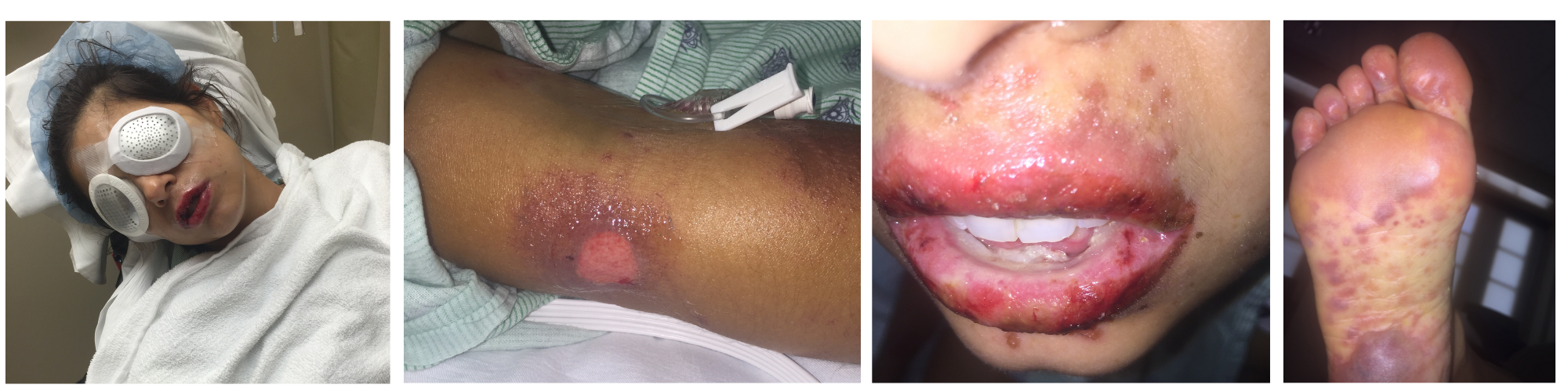
[fusion_builder_container type=”flex” hundred_percent=”no” equal_height_columns=”no” menu_anchor=”” hide_on_mobile=”small-visibility,medium-visibility,large-visibility” class=”” id=”” background_color=”” background_image=”” background_position=”center center” background_repeat=”no-repeat” fade=”no” background_parallax=”none” parallax_speed=”0.3″ video_mp4=”” video_webm=”” video_ogv=”” video_url=”” video_aspect_ratio=”16:9″ video_loop=”yes” video_mute=”yes” overlay_color=”” video_preview_image=”” border_color=”” border_style=”solid” padding_top=”” padding_bottom=”” padding_left=”” padding_right=””][fusion_builder_row][fusion_builder_column type=”1_1″ layout=”1_1″ background_position=”left top” background_color=”” border_color=”” border_style=”solid” border_position=”all” spacing=”yes” background_image=”” background_repeat=”no-repeat” padding_top=”” padding_right=”” padding_bottom=”” padding_left=”” margin_top=”0px” margin_bottom=”0px” class=”” id=”” animation_type=”” animation_speed=”0.3″ animation_direction=”left” hide_on_mobile=”small-visibility,medium-visibility,large-visibility” center_content=”no” last=”true” min_height=”” hover_type=”none” link=”” border_sizes_top=”” border_sizes_bottom=”” border_sizes_left=”” border_sizes_right=”” first=”true”][fusion_text columns=”” column_min_width=”” column_spacing=”” rule_style=”default” rule_size=”” rule_color=”” hue=”” saturation=”” lightness=”” alpha=”” content_alignment_medium=”” content_alignment_small=”” content_alignment=”” hide_on_mobile=”small-visibility,medium-visibility,large-visibility” sticky_display=”normal,sticky” class=”” id=”” margin_top=”” margin_right=”” margin_bottom=”” margin_left=”” fusion_font_family_text_font=”” fusion_font_variant_text_font=”” font_size=”” line_height=”” letter_spacing=”” text_transform=”none” text_color=”” animation_type=”” animation_direction=”left” animation_speed=”0.3″ animation_offset=””] Grace Avila was having back pain when her physician prescribed a muscle relaxer. Within a few weeks, blisters appeared across her body. Doctors thought she had a hand, foot, and mouth disease, a common viral infection in young children that sometimes occurs in adults. Over and over, she was told, “Just let it run its course.” But to Grace, whatever was happening to her body felt like it was eating her alive. She couldn’t eat, walk, or see. When her sister visited, she immediately called 911. Grace had blisters covering her mouth, eyes, throat, torso, and more. “I’d rather be dead than be here,” she told her sister.

Living with Stevens-Johnson Syndrome

A nurse by profession, her sister was convinced Grace had Stevens-Johnson Syndrome (SJS), a severe condition that affects the skin, genitals, eyes, and mucous membranes, including the lining of the digestive tract. Stevens-Johnson Syndrome is caused by an adverse reaction to medication or, sometimes, infection and can cause severe symptoms such as Grace’s that require months to heal, if they heal at all. Grace’s condition was so debilitating that she spent two weeks in the hospital with her eyes completely covered by bandages and her mouth sealed shut because of blisters. She was kept alive via IV fluids. After two weeks in care, she had surgery, where surgeons placed membranes on her eyes to prevent further scarring. Following her hospital stay and surgery, Grace’s left eye didn’t produce any tears, and it never will again. When she cries, the eye becomes terribly swollen. Grace was devastated. An avid athlete, she did CrossFit every day and ran marathons. Now, she could barely walk, and she was unable to see. “I needed one hundred percent help after I got out of the hospital,” Grace says. “I needed help caring for my children, my sister had to bathe me, I couldn’t work, and then six months later, my mother passed away. It was the worst year of my life. I didn’t want to open my eyes because the pain was so excruciating. I had ointment and drops and drops and drops, but they never really helped.”
Finding Help for Her Eyes

Thus, Grace turned her attention to her vision and healing to find the best doctors. She didn’t understand why she couldn’t just get a new cornea. She saw a corneal specialist at Memorial Herman Health in Houston, who referred her to Dr. Stephen Pflugfelder, an ophthalmologist at Baylor College of Medicine.  He recommended PROSE. PROSE is a comprehensive medical treatment that includes cornea specialist ophthalmologists and optometrists who have completed an intensive BostonSight PROSE Clinical Fellowship. During treatment, doctors customize PROSE devices, highly specialized scleral lenses, out of gas-permeable polymers for each patient’s condition and unique eye shape. The devices are filled with preservative-free saline and placed on the sclera, the white part of the eye. The saline is in direct contact with the cornea and provides a constant flow of moisture to the eye. “The ocular surface is a target of SJS, which causes scarring of the eyelids, conjunctiva, and ducts of the tear glands,” says Dr. Pflugfelder. “This often leaves patients with a severely dry ocular surface that is susceptible to trauma from the scarred eyelids and turned-in eyelashes during blinking. Patients may experience severe eye discomfort and light sensitivity, and, over time, these problems can cause sight-threatening cornea clouding.” [/fusion_text][fusion_youtube id=”https://www.youtube.com/watch?v=AIY9Na8UQcY&ab_channel=BostonSight” alignment=”center” width=”” height=”” autoplay=”false” api_params=”” title_attribute=”” video_facade=”” hide_on_mobile=”small-visibility,medium-visibility,large-visibility” class=”” css_id=”” /][fusion_text columns=”” column_min_width=”” column_spacing=”” rule_style=”default” rule_size=”” rule_color=”” hue=”” saturation=”” lightness=”” alpha=”” content_alignment_medium=”” content_alignment_small=”” content_alignment=”” hide_on_mobile=”small-visibility,medium-visibility,large-visibility” sticky_display=”normal,sticky” class=”” id=”” margin_top=”” margin_right=”” margin_bottom=”” margin_left=”” fusion_font_family_text_font=”” fusion_font_variant_text_font=”” font_size=”” line_height=”” letter_spacing=”” text_transform=”none” text_color=”” animation_type=”” animation_direction=”left” animation_speed=”0.3″ animation_offset=””]

PROSE for SJS Patients

“PROSE is the optimal therapy for this condition because it keeps the cornea moist and shields it from irregular eyelids and lashes. Patients experience almost immediate relief from their eye discomfort and light sensitivity when the devices are placed on the eye. It can preserve their vision and allow them to return to a normal functional life,” he says. Together, Dr. Plugfelder and Dr. Christina Abuata, a PROSE Provider, worked with Grace to design a custom prosthetic device for her left eye. She has been wearing a 19mm device on her left eye for the past nine years and recently received a PROSE device for her right eye, too. “Most SJS patients will need to use artificial tears, ointments, and prescribed medications to feel relief throughout the day,” said Dr. Abuata.  “However, this sometimes isn’t enough, and more aggressive treatment is required. PROSE is an alternative treatment that is indicated for patients with SJS that can help them feel better, see better, and go back to their normal lives.” “Without PROSE, I cannot live,” Grace says. “I cannot open my left eye. It burns. It doesn’t produce tears. It’s like day and night when I put my PROSE devices in. I get up at four in the morning to put them in so I can work out.”

Using PROSE Devices

Grace says the PROSE devices can be a bit uncomfortable because of her eye condition, but that pain and discomfort are different feelings. “I’d rather be a little uncomfortable to start and not be in pain. It’s an absolute relief when the devices are on.” It took more than a year for Grace to heal and manage the emotional toll of the disease and her mother’s death. “It took me a long time to accept what was wrong with me,” she says. ‘’I was a size zero because I couldn’t eat, but slowly, as I healed, I started eating better. I went on retreats, had counseling, and prayed a lot. I had to learn how to cope with losing my mother and my health. I lost me, and I had to find me again.” She gives thanks to God for the support of her family and her workplace, knowing that not everyone is so fortunate. “Your health is completely shattered with SJS,” she says. “I didn’t want to live. PROSE changed my whole life. I one hundred percent can open my [left] eye. I have twenty twenty vision. I can see. I would sell a kidney for this if I didn’t have such good insurance. I want to share my story because it’s unbelievable how much pain you’re in, and then, Bam! No more pain. We need PROSE.” [/fusion_text][fusion_youtube id=”https://www.youtube.com/watch?v=FZolCSYA178&t=6s” alignment=”center” width=”” height=”” autoplay=”false” api_params=”” title_attribute=”” video_facade=”” hide_on_mobile=”small-visibility,medium-visibility,large-visibility” class=”” css_id=”” /][/fusion_builder_column][/fusion_builder_row][/fusion_builder_container]

https://www.bostonsight.org/wp-content/uploads/2026/06/Avila_BostonSight_Baylor-rotated-1.jpg 2448 2448 michele /wp-content/uploads/2026/05/bostonsight-logo.svg michele2022-11-17 13:10:372026-06-18 11:11:19Stevens-Johnson Syndrome (SJS) Patient Finds Relief with PROSE

PROSE Provider Spotlight: Dr. Brittany Yelle | Precision Cornea Centre of Ottawa

November 3, 2022/0 Comments/in Blog Posts, PROSE/by michele
We recently sat down with Dr. Brittany Yelle, a PROSE Provider at Precision Cornea Centre in Ottawa, Canada, to learn about her experience using PROSE treatment and scleral lenses, and how she chooses between these modalities when working with patients.  Prefer video? You can watch Dr. Yelle answer our questions here.

What led you to become a PROSE (Prosthetic Replacement of the Ocular Surface Ecosystem) provider? 

Dr. Brittany Yelle

What led me to become a PROSE Provider was having really complex cases sent over by my cornea colleagues and not being able to get adequate fittings. I wouldn’t put up with telling them that there was nothing else that could be done. So, I decided to become part of the PROSE family so that I can help those patients out. 

How has fitting specialty lenses changed your perspective on the needs of your patients? 

Fitting PROSE or specialty contact lenses has definitely changed my perspective in the sense that I we’d put up with things beforehand and say that’s all that could be done. And now, we’ve got so many other options for patients. So, if patients are motivated, I tell them that we should never give up and keep going. 

When do you use PROSE treatment vs. a traditional scleral lens? 

I consider PROSE treatment to be like a tailored suit. Some patients prefer having their suits tailored right off the bat, and some patients have no choice but to get a tailored suit. And so, depending on the case, I’ll often give them the option [between PROSE and scleral lenses]. If the patient is very particular and wants it to be very personalized right off the get-go, we’ll start with PROSE. Then there are some patients that just don’t have a choice because of what I need to go over. 

When do you use PROSE right from the start? 

An eye that would need PROSE right off the bat are typically ones with a lot of elevations on the conjunctiva, so things like glaucoma surgery, areas of elevation like pinguecula and pterygium, or patients who are struggling with graphs that are failing and needing proper oxygen permeability. Even with the best materials sometimes you can’t get it. So having to add in fenestration and being able to adapt every edge of the lens is definitely something I can only do with PROSE. 

How far do patients come for PROSE treatment? 

For PROSE treatment we’re the only center that offers it for all provinces. We get patients all the way from the east coast and all the way out west as well. Some patients travel from quite far away, but most patients I would say are within a 12-hour drive of us. 

What is your favorite part of your job? 

The favorite part of my job is definitely hearing patients tell me they are able to do things that they weren’t able to do before they came in: To get a driver’s license, being able to apply for certain jobs, people being able to become pilots when they weren’t eligible beforehand. 

Is there a patient story that has had a particular impact on you? 

I have a patient that was from the northern part of Ontario where they don’t have access to a lot of care up there and was told that he had too advanced of keratoconus and that here was nothing to do for his vision; and even if he got corneal transplants, he probably wouldn’t see any better. He was on disability because he was legally blind in both eyes. And he was sent down to our clinic basically just to get a confirmed diagnosis. What ended up happening is we fit him on the spot with some of our trial lenses just to help him out, and now he is 20/20 in both eyes, and he is living his best life.  

What do you look forward to achieving as a PROSE provider? 

As a PROSE Provider something that I’d like to achieve is maybe being able to fundraise a little bit better to help patients have access to their devices. I have a lot of patients that, unfortunately, if insurance doesn’t cover or if they don’t have the funds, it’s just off the table, and I’d love to be able to offer these lenses to those patients without money being an issue. 
https://www.bostonsight.org/wp-content/uploads/2026/06/Dr.-Brittany-Yelle.jpg 480 320 michele /wp-content/uploads/2026/05/bostonsight-logo.svg michele2022-11-03 13:28:262026-06-18 11:11:17PROSE Provider Spotlight: Dr. Brittany Yelle | Precision Cornea Centre of Ottawa

Pages

  • About
  • Clinical Trials and R&D Services
  • Conditions We Treat
  • Contact Us
  • Dry Eye
  • Education
  • Find a PROSE Clinic
  • FitAcademy
  • FitAcademy for Residents
  • FitAcademy Immersive
  • FitAcademy International
  • GVHD
  • Home
  • Keratoconus
  • Manufacturing
  • Needham PROSE Clinic
  • News
  • Notice of Privacy Practices for Patients
  • Ophthalmology Resident Lectures
  • Our Approach
  • Our Partners
  • Our People
  • Our Products
  • Patient Care
  • Patient Information Booklet
  • Patient Resources
  • Patient Stories
  • Pediatrics
  • Post-Corneal Transplant
  • Post-LASIK
  • Practitioner IFU
  • Privacy Policy
  • PROSE Provider Payment Form
  • PROSE Treatment
  • Publications
  • Research
  • Research Studies
  • Sjögren’s Disease
  • Software Platforms
  • Stevens-Johnson Syndrome
  • Technology
  • Terms of Use
  • Visiting Clinicians
  • Ways to Support Us

Categories

  • Blog Posts
  • Clinic Updates
  • In the Media
  • Patient Stories
  • Press Release
  • PROSE
  • SCLERAL

Archive

  • May 2026
  • April 2026
  • February 2026
  • January 2026
  • December 2025
  • November 2025
  • October 2025
  • September 2025
  • July 2025
  • June 2025
  • May 2025
  • January 2025
  • November 2024
  • October 2024
  • September 2024
  • July 2024
  • June 2024
  • May 2024
  • April 2024
  • March 2024
  • February 2024
  • January 2024
  • December 2023
  • November 2023
  • October 2023
  • September 2023
  • July 2023
  • May 2023
  • March 2023
  • February 2023
  • December 2022
  • November 2022
  • October 2022
  • September 2022
  • July 2022
  • June 2022
  • May 2022
  • April 2022
  • February 2022
  • January 2022
  • December 2021
  • November 2021
  • October 2021
  • September 2021
  • August 2021
  • July 2021
  • June 2021
  • May 2021
  • April 2021
  • March 2021
  • February 2021
  • January 2021
  • December 2020
  • November 2020
  • October 2020
  • September 2020
  • July 2020
  • June 2020
  • March 2020
  • Patient Care
    • PROSE Treatment
    • Find a PROSE Clinic
    • Conditions We Treat
    • Patient Stories
    • Patient Resources
    • Pediatrics
  • Technology
    • Our Products
    • Software Platforms
    • Manufacturing Lab
  • Education
    • Visiting Clinicians
    • FitAcademy International
    • FitAcademy for Residents
    • FitAcademy Immersive
    • Ophthalmology Resident Lectures
  • Research
    • Clinical Trials and R&D Services
    • Research Studies
    • Publications
  • About
    • Our Approach
    • News
    • Our People
    • Partners
  • Needham PROSE Clinic
  • Donate
  • Contact Us

© 2026 BostonSight. All rights reserved.

Privacy PolicyTerms of Use

Scroll to top Scroll to top Scroll to top
This website uses cookies to improve your experience. We'll assume you're ok with this, but you can opt-out if you wish. Cookie settings ACCEPT
Privacy & Cookies Policy

Privacy Overview

This website uses cookies to improve your experience while you navigate through the website. Out of these cookies, the cookies that are categorized as necessary are stored on your browser as they are essential for the working of basic functionalities of the website. We also use third-party cookies that help us analyze and understand how you use this website. These cookies will be stored in your browser only with your consent. You also have the option to opt-out of these cookies. But opting out of some of these cookies may have an effect on your browsing experience.
Necessary
Always Enabled

Necessary cookies are absolutely essential for the website to function properly. This category only includes cookies that ensures basic functionalities and security features of the website. These cookies do not store any personal information.

Non Necessary

Any cookies that may not be particularly necessary for the website to function and is used specifically to collect user personal data via analytics, ads, other embedded contents are termed as non-necessary cookies. It is mandatory to procure user consent prior to running these cookies on your website.

Save & Accept